

- Understanding Chamomile and Its Remarkable Benefits
- Essential Ingredients and Equipment for Your Chamomile Tincture
- Relaxing DIY Chamomile Tincture
- Step-by-Step Guide to Making Your Chamomile Tincture
- Proper Storage and Shelf Life Considerations
- Homemade Chamomile Tincture: Dosage Guidelines and Usage Recommendations
- Safety Considerations and Potential Interactions
- Maximizing the Benefits of Your Homemade Tincture
- Conclusion
- Frequently Asked Questions
In our fast-paced world, finding moments of genuine calm can feel like searching for a needle in a haystack. While we reach for various remedies to ease stress and promote better sleep, sometimes the most effective solutions come from nature’s own pharmacy. Enter the humble chamomile flower, a herbal medicine that has been soothing frayed nerves for centuries.
Making your own chamomile tincture at home is a great way to save money and helps you avoid store-bought alternatives and their unknowable quality. It also creates a personal ritual of wellness where you respect and love yourself enough to want to know exactly what goes into your body, plus having a bottle of liquid relaxation ready if life gets stressful is no bad thing. Today, we’ll explore how to craft this golden elixir that captures the essence of chamomiles tranquility in concentrated form.
Understanding Chamomile and Its Remarkable Benefits
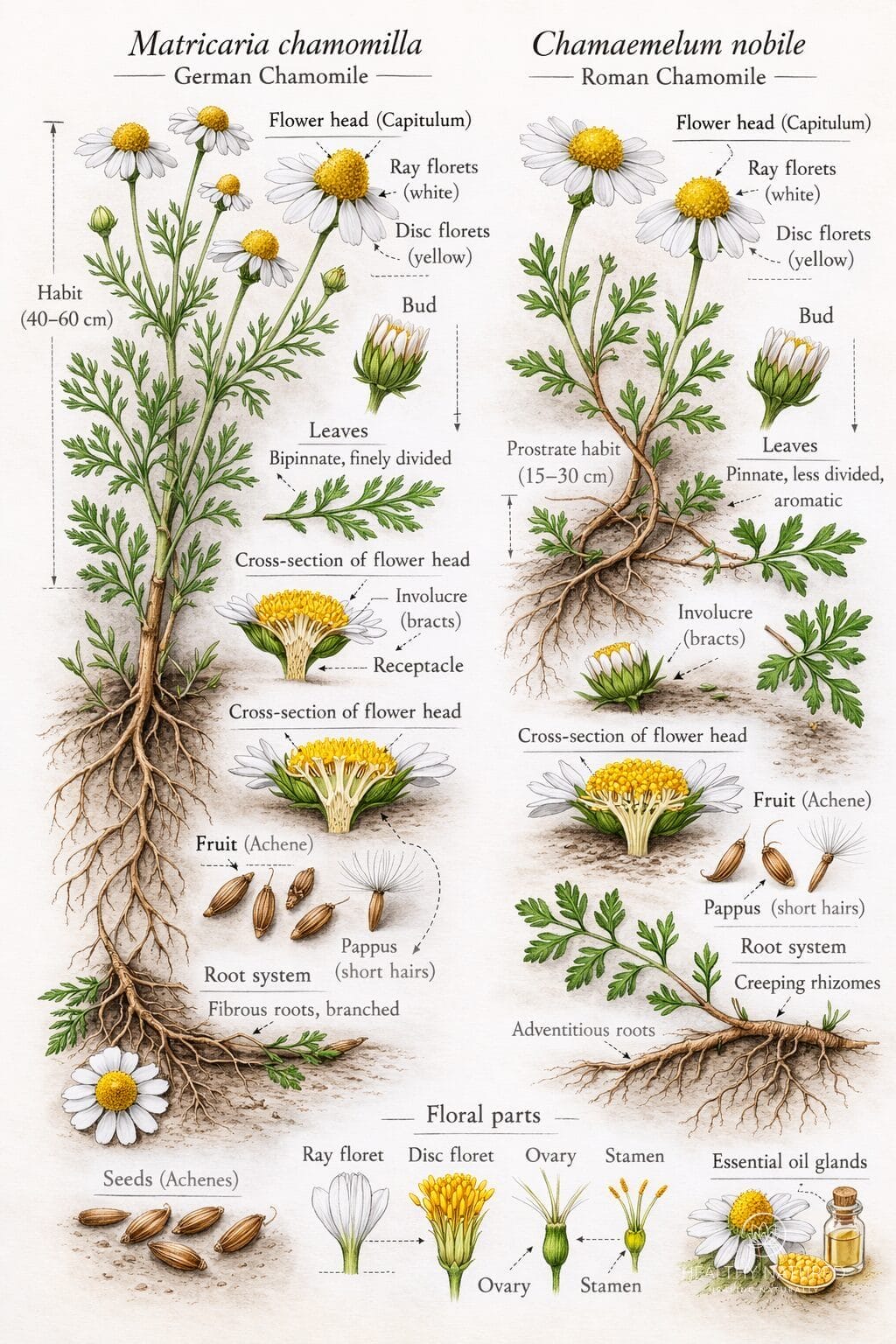
Chamomile, scientifically known as Matricaria chamomilla or Chamaemelum nobile, has earned its reputation as one of the most trusted herbs in traditional medicine. This daisy-like flower contains powerful compounds called flavonoids, particularly apigenin1Salehi, Bahare et al. “The Therapeutic Potential of Apigenin.” International journal of molecular sciences vol. 20,6 1305. 15 Mar. 2019, doi:10.3390/ijms20061305, which binds to specific receptors in your brain to promote calmness and reduce anxiety. The benefits of apigenin are as follows.
1. Relaxation, Anxiety Reduction, and Sleep Support
This is apigenin’s most traditional and well-supported use, aligning perfectly with chamomile’s reputation as a calming herb.
Mechanism: Apigenin acts as a ligand for central benzodiazepine receptors and modulates GABA_A receptors (sometimes independently of the classic benzodiazepine site). It can exert mild anxiolytic (anti-anxiety) and sedative effects without strong muscle relaxation, anticonvulsant action, or heavy sedation at typical doses. It may also influence NMDA receptors and reduce excitatory transmission2Viola, H et al. “Apigenin, a component of Matricaria recutita flowers, is a central benzodiazepine receptors-ligand with anxiolytic effects.” Planta medica vol. 61,3 (1995): 213-6. doi:10.1055/s-2006-958058.
Randomized trials of chamomile extract (standardized to apigenin content) showed reductions in generalized anxiety disorder (GAD) symptoms. One used 220–1100 mg extract; another long-term trial used 1500 mg daily (500 mg 3x/day), with benefits for anxiety and some mood improvements3Zick, S. M., Wright, B. D., Sen, A., & Arnedt, J. T. (2011). Preliminary examination of the efficacy and safety of a standardized chamomile extract for chronic primary insomnia: A randomized placebo-controlled pilot study. BMC complementary and alternative medicine, 11(1), 1-8.

The beauty of chamomile lies in its gentle yet effective nature. Unlike synthetic sleep aids or anxiety medications, chamomile works with your body’s natural rhythms rather than forcing drowsiness. Regular users often report improved sleep quality, reduced digestive discomfort, and a general sense of emotional balance that extends throughout their daily lives.
In people with chronic insomnia, chamomile extract (providing at least 2.5 mg apigenin) trended toward better daytime functioning and sleep quality4Kramer, D. J., & Johnson, A. A. (2024). Apigenin: A natural molecule at the intersection of sleep and aging. Frontiers in Nutrition, 11. https://doi.org/10.3389/fnut.2024.1359176.
What makes a tincture particularly appealing is its concentrated potency and long shelf life. While chamomile tea is wonderful, a tincture extracts far more of the plant’s active compounds, meaning you need just a few drops to achieve the same calming effects as multiple cups of tea. Plus, herbal tinctures can last for years when stored properly, making them an excellent investment in your long-term wellness routine.
Essential Ingredients and Equipment for Your Chamomile Tincture
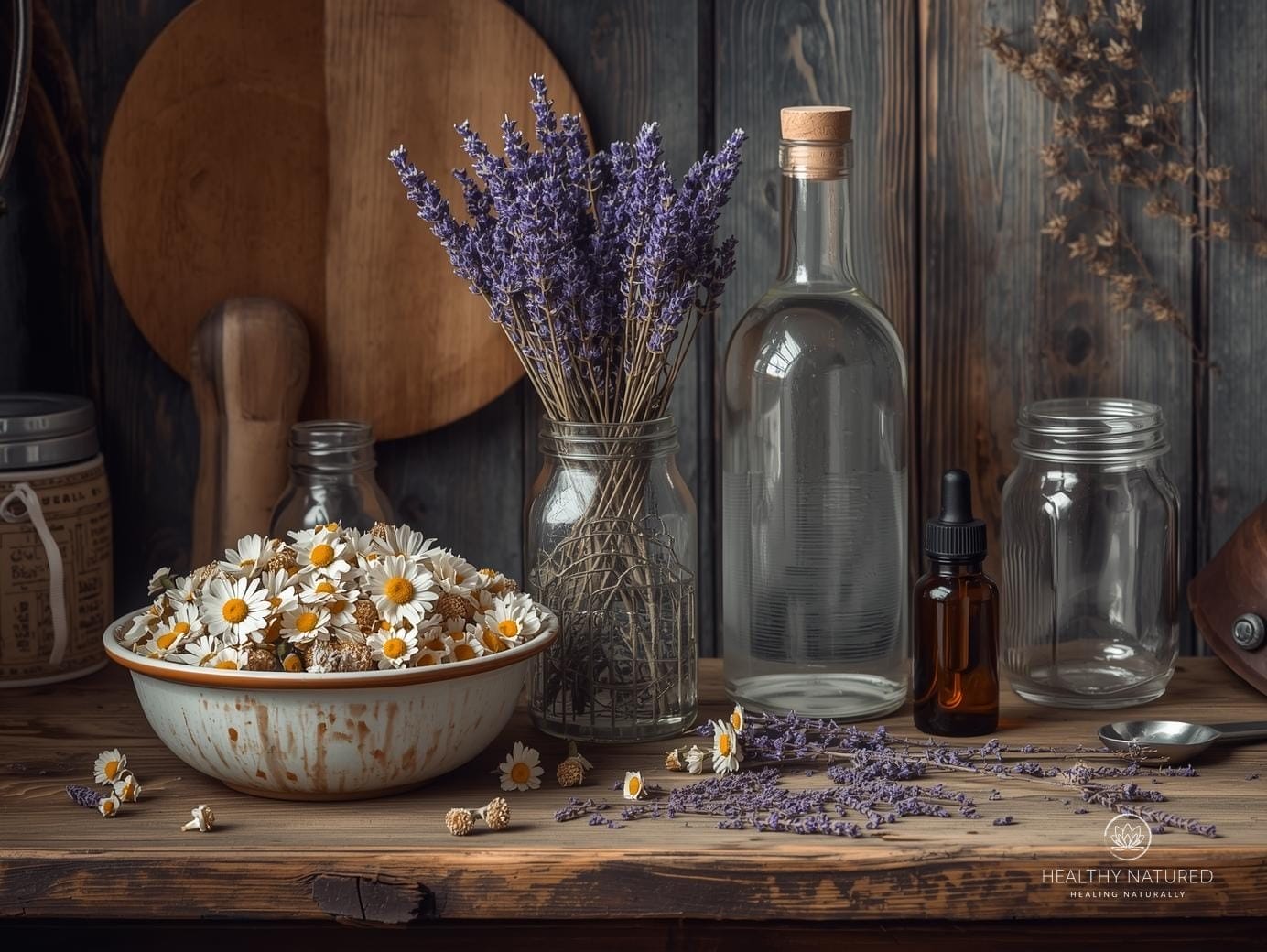
Creating a high-quality homemade chamomile tincture requires surprisingly few ingredients, but choosing the right ones makes all the difference. You’ll need:
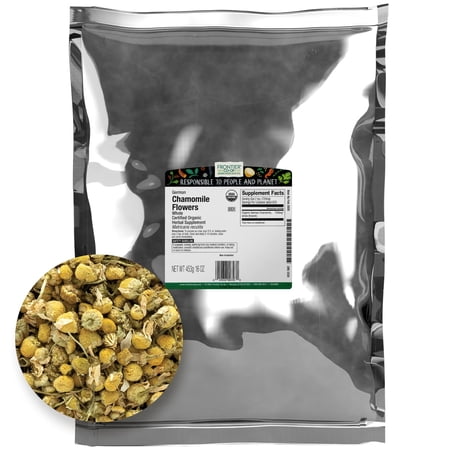
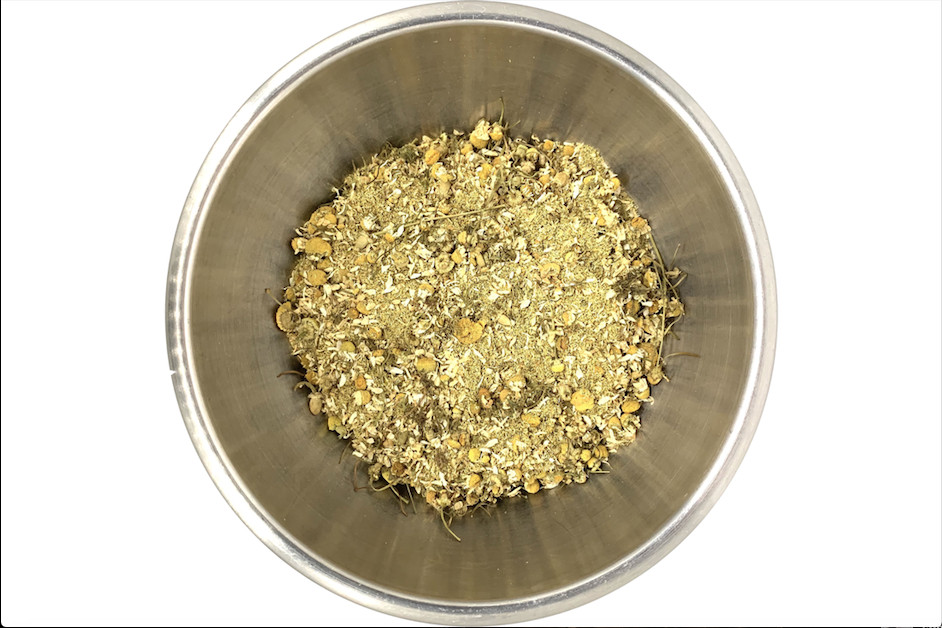
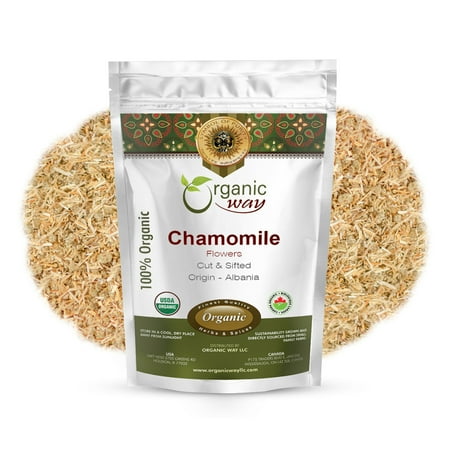
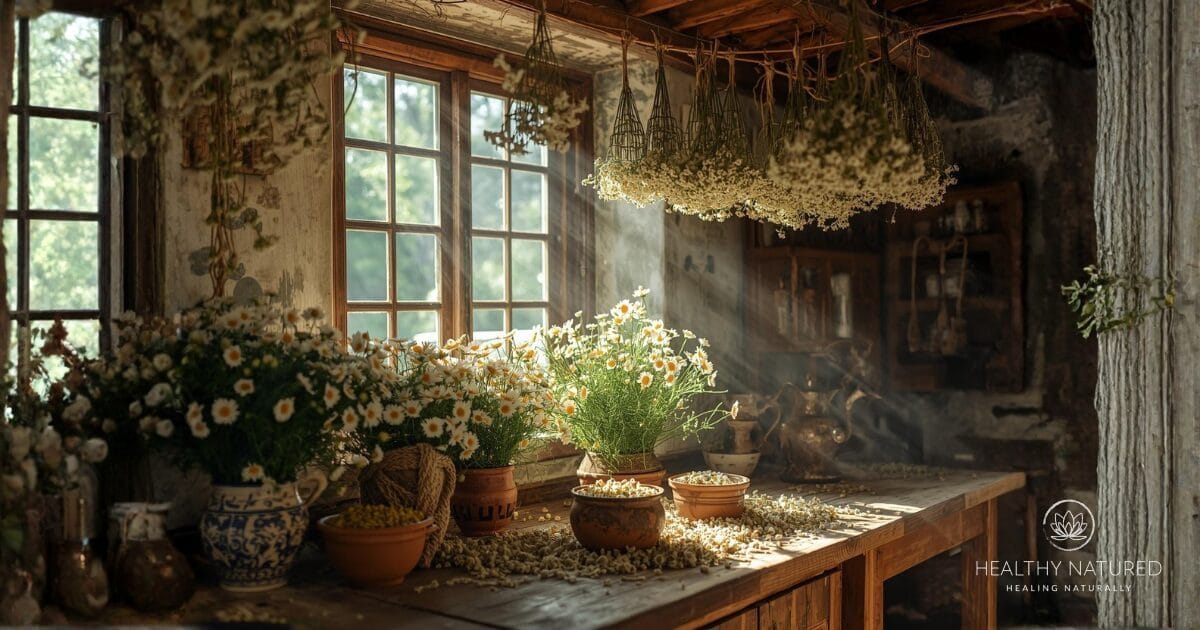
Dried chamomile flowers – about two ounces for a standard batch. While you can use fresh flowers, dried ones provide more concentrated compounds and are easier to work with for beginners.
For the alcohol base, choose a high-proof spirit between 80-100 proof. Vodka works excellently because of its neutral flavor, but you can also use brandy for a warmer taste profile. The alcohol serves as both a preservative and an extraction medium, pulling out the water-soluble and alcohol-soluble compounds from the chamomile.
Equipment-wise, you’ll need:
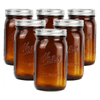
- a clean glass jar with a tight-fitting lid – mason jars work perfectly. Avoid plastic containers as they can interact with the alcohol and compromise the quality of your tincture
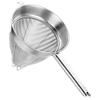
- a fine-mesh strainer, cheesecloth or coffee filters for straining
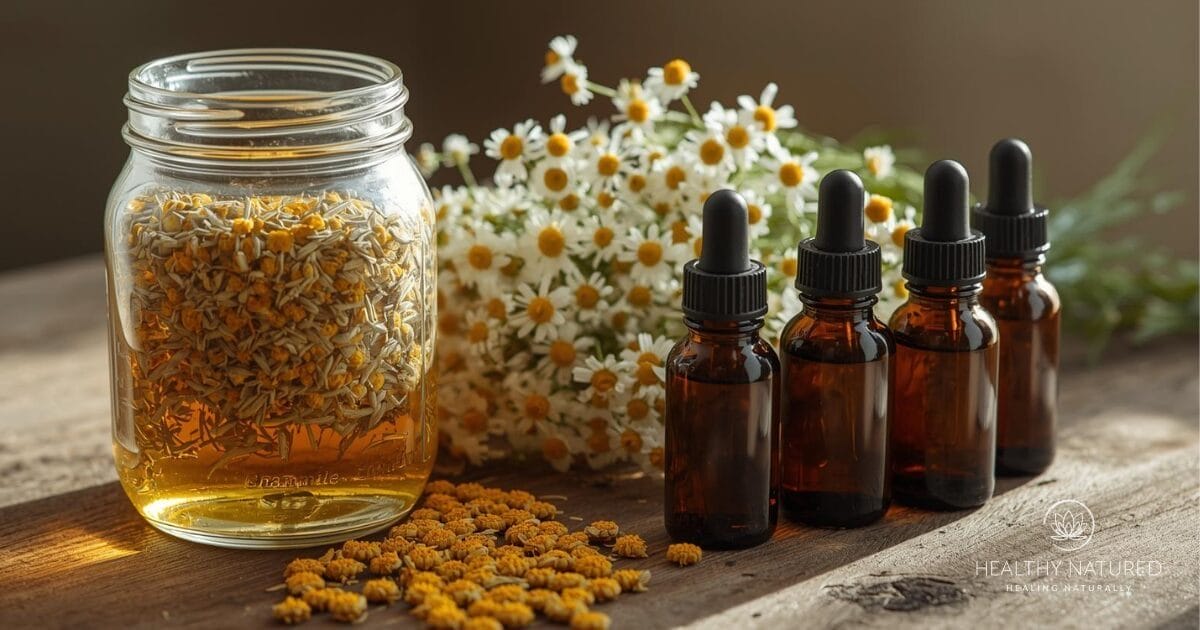
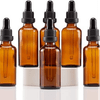
- dark glass dropper bottles for storage. The dark glass protects your finished tincture from light degradation, preserving its potency for months or even years.
Relaxing DIY Chamomile Tincture


Equipment


Method
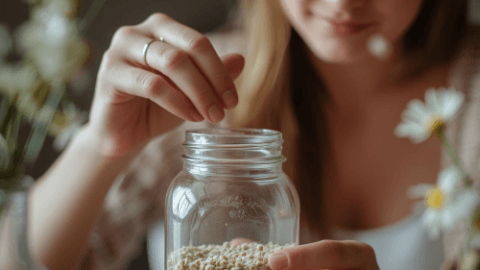
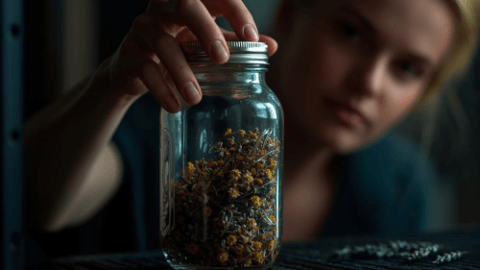
- Prepare your herbs and jar.Sterilize the glass jar (boil or run through dishwasher). If using dried chamomile, lightly crumble the flowers for better extraction. Fill the jar about 1/2 full with dried flowers (do not pack tightly). For fresh flowers, fill about 2/3 full.

- Add the Menstruum (alcohol).Pour alcohol (or glycerin) over the flowers until fully submerged with 1–2 inches of liquid on top. This prevents mold. Gently stir or shake to release air bubbles.
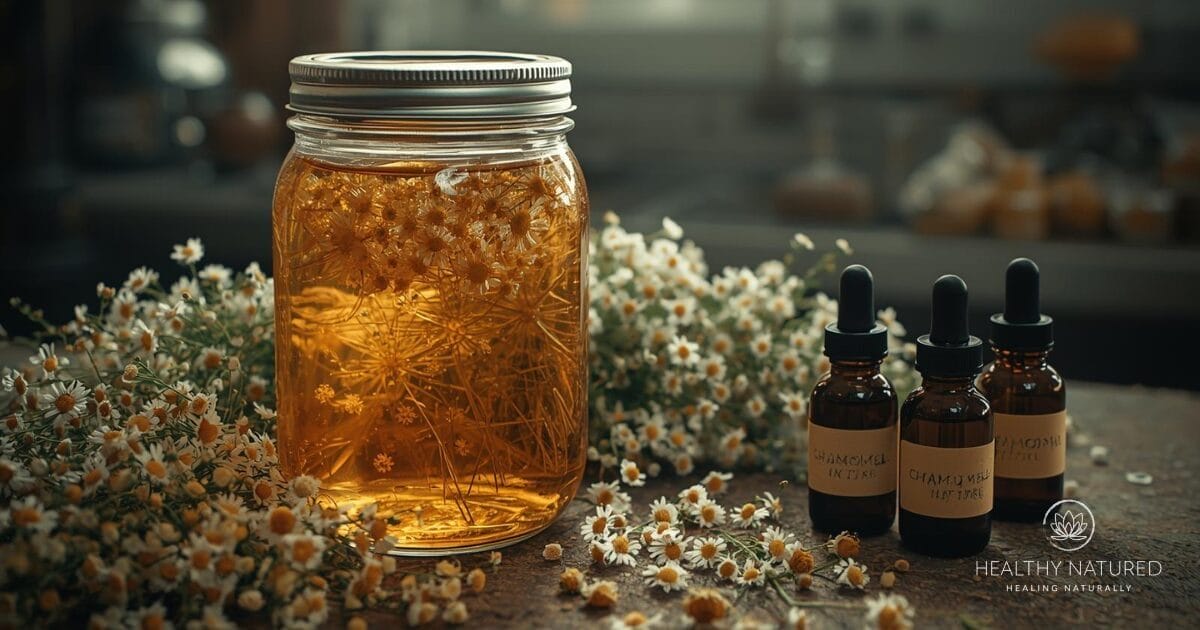
- Seal and macerate.Seal the jar tightly. Label with date, ingredients, and "Chamomile Tincture." Store in a cool, dark place (like a cupboard). Shake gently daily for the first 1–2 weeks, then every few days. Let it infuse for 4 weeks (minimum 2 weeks; up to 6 weeks for stronger potency). The liquid will turn golden-amber.
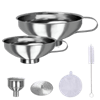
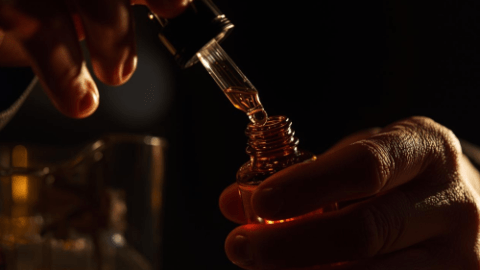
- Strain and bottle.After infusing for 28 days, strain through cheesecloth or a fine strainer into a clean bowl, pressing the herbs to extract every drop. Use a funnel to transfer the liquid into dark amber dropper bottles. Discard (or compost) the spent herbs. Label bottles with date and dosage info. Store in a cool, dark place. Alcohol-based tinctures last 2–5+ years (or indefinitely if alcohol content stays high).

Nutrition
Notes
- You can use fresh herbs and lower-proof alcohol but the shelf life of your tincture will be greatly reduced.
- Always ensure you have a 2-3 cm coverage of alcohol above the herbals. Top up with alcohol as often as required.
- Alcohol-based tinctures last 2–5+ years (indefinitely if alcohol content is high).
- Glycerin versions last about 1 year; refrigerate for longer freshness.
- Check periodically for cloudiness or off smells (discard if questionable).
- Standard dose: 1/4–1 teaspoon (about 30–60 drops) in water, tea, or under the tongue, up to 3 times daily. Start low (20 drops) and adjust as needed—chamomile is very gentle.
- For sleep or stress: Take 30–60 minutes before bed.
- It can be added to baths, used in compresses, or diluted for skin soothing.
Private Notes
Tried this recipe?
Mention @HealthyNatured or tag #healthynatured!Step-by-Step Guide to Making Your Chamomile Tincture
Begin by measuring your dried chamomile flowers into your clean glass jar. The general ratio is about one part herb to five parts alcohol by volume, though you can adjust this based on your preference for strength. Pour the alcohol over the flowers, ensuring they’re completely covered with at least an inch of liquid above the plant material.
Secure the lid tightly and give the jar a gentle shake to distribute the herbs evenly. Label your jar with the contents and date – trust me, you’ll forget these details faster than you think. Store the jar in a cool, dark place like a pantry or cupboard away from direct sunlight.
Now comes the patience part: let your tincture macerate for four to six weeks. During this time, shake the jar gently every few days to keep the extraction process active. You’ll notice the liquid gradually taking on a golden amber color as the chamomile releases its beneficial compounds.
After the waiting period, strain your tincture through cheesecloth or a fine-mesh strainer into a clean bowl. For an extra-clear tincture, strain again through coffee filters. Press the spent plant material gently to extract any remaining liquid, but don’t squeeze too hard as this can introduce unwanted sediment.


Proper Storage and Shelf Life Considerations
Transfer your finished tincture into dark glass dropper bottles, leaving minimal headspace to reduce oxidation. Amber or cobalt blue bottles work best for protecting against light damage. Store these bottles in a cool, dark location – a medicine cabinet or pantry shelf works perfectly.
When properly made and stored, your herbal tinctures can maintain its potency for three to five years. The high alcohol content acts as a natural preservative, preventing bacterial growth and maintaining the integrity of the active compounds. Always use clean droppers and avoid contaminating the bottle with water or other substances.
Keep a simple log noting when you made each batch and any observations about potency or effectiveness. This helps you refine your technique over time and ensures you’re always working with the freshest possible product.
Homemade Chamomile Tincture: Dosage Guidelines and Usage Recommendations
Starting with the right dosage is crucial for experiencing the benefits of chamomile tincture without any unwanted effects. You can use our tincture dosage calculator to work out the correct dosage for you. Begin with 10-15 drops (about half a dropper) mixed in a small amount of water or juice. Take this dose 30 minutes before bedtime for sleep support, or during stressful moments throughout the day for anxiety relief.
You can gradually increase the dosage to 20-30 drops if needed, but most people find the lower range perfectly effective. The beauty of tinctures lies in their flexibility – you can easily adjust your dose based on your body’s response and the severity of your symptoms.
For best absorption, hold the tincture under your tongue for 30-60 seconds before swallowing. This sublingual method allows the compounds to enter your bloodstream more quickly than if you simply swallow them immediately. If the alcohol taste is too strong, diluting in water or herbal tea works just as well.
Safety Considerations and Potential Interactions
While chamomile is generally considered very safe for most people, it’s important to be aware of potential interactions and contraindications. Those with allergies to plants in the daisy family (including ragweed, chrysanthemums, or marigolds) should avoid chamomile entirely, as cross-reactions can occur.
Chamomile can enhance the effects of blood-thinning medications like warfarin, so consult with your healthcare provider if you’re taking any prescription blood thinners. Similarly, because chamomile has mild sedative properties, avoid combining it with other sedating medications or alcohol beyond what’s in the tincture itself.
Pregnant and breastfeeding women should consult their healthcare providers before using chamomile tinctures, as the alcohol content and concentrated nature of tinctures make them different from occasional chamomile tea consumption. When in doubt, always err on the side of caution and seek professional guidance.
Maximizing the Benefits of Your Homemade Tincture
To get the most from your chamomile tincture, consistency is key. Rather than using it only during acute stress or sleepless nights, consider incorporating small daily doses into your routine. Many users find that regular, low-dose use helps maintain a baseline level of calm that makes them more resilient to daily stressors.
Combine your tincture use with other relaxation practices such as yoga, aromatherapy, or meditation for enhanced effects. Taking your dose while practicing deep breathing, during a warm bath, or as part of an evening wind-down routine can amplify the calming benefits. The ritual itself becomes part of the therapeutic process.
Keep a simple journal tracking your usage and effects. Note the time of day, dosage, and how you felt both immediately and hours later. This personal data helps you optimize your dosing schedule and identify patterns in your response to the tincture.


Conclusion
Creating your own chamomile tincture is more than just a DIY project – it’s an investment in your well-being and a connection to centuries of herbal wisdom. This golden bottle of relaxation offers a natural, effective way to manage stress, improve sleep quality, and find moments of peace in our chaotic world.
The process itself is meditative and rewarding, teaching patience while the herbs slowly release their healing compounds. With proper preparation and storage, you’ll have a potent ally against stress that’s always within reach. Whether you’re dealing with occasional sleeplessness, daily anxiety, or simply want to enhance your relaxation routine, homemade chamomile tincture provides a gentle yet powerful solution that works in harmony with your body’s natural rhythms.
Start your first batch today, and in just a few weeks, you’ll have your own bottle of liquid tranquility ready whenever life demands a moment of calm. Your future self will thank you for taking this simple step toward natural wellness and self-care.
Frequently Asked Questions
How long does it take for Relaxing chamomile tincture to work?
Most people notice effects within 15-30 minutes when taken sublingually (under the tongue). For sleep support, take it 30-60 minutes before bedtime for optimal results.
Can I make chamomile tincture without alcohol?
Yes, you can make glycerin-based tinctures, though they’re less potent and have shorter shelf lives. Use vegetable glycerin instead of alcohol, following the same ratios and steeping times.
Is it safe to take chamomile tincture daily?
For most people, daily use in recommended doses is safe. However, start with occasional use to assess your body’s response, and consult healthcare providers if you have medical conditions or take medications.
How do I know if my tincture has gone bad?
Signs of spoilage include cloudy appearance, off odors, mold growth, or significant color changes. Properly made and stored alcohol-based tinctures rarely spoil due to their high alcohol content.
Can children use chamomile tincture?
Due to the alcohol content, traditional tinctures aren’t recommended for children. Consider alcohol-free glycerin tinctures or chamomile tea for pediatric use, always with healthcare provider approval.
What’s the difference between chamomile tincture and chamomile tea?
Tinctures are much more concentrated and have longer shelf lives. While tea extracts water-soluble compounds, tinctures extract both water and alcohol-soluble compounds, making them more potent per dose.
References
- 1Salehi, Bahare et al. “The Therapeutic Potential of Apigenin.” International journal of molecular sciences vol. 20,6 1305. 15 Mar. 2019, doi:10.3390/ijms20061305
- 2Viola, H et al. “Apigenin, a component of Matricaria recutita flowers, is a central benzodiazepine receptors-ligand with anxiolytic effects.” Planta medica vol. 61,3 (1995): 213-6. doi:10.1055/s-2006-958058
- 3Zick, S. M., Wright, B. D., Sen, A., & Arnedt, J. T. (2011). Preliminary examination of the efficacy and safety of a standardized chamomile extract for chronic primary insomnia: A randomized placebo-controlled pilot study. BMC complementary and alternative medicine, 11(1), 1-8
- 4Kramer, D. J., & Johnson, A. A. (2024). Apigenin: A natural molecule at the intersection of sleep and aging. Frontiers in Nutrition, 11. https://doi.org/10.3389/fnut.2024.1359176