

- What You Need and How to Choose Your First Bowl
- Setting Up Your Space for a Clear, Comfortable Session
- Basic Techniques: Striking, Rim-Rubbing, and Controlling Tone
- A Simple, Step-by-Step Singing Bowl Sound Bath Sequence As Host
- Techniques for Blending Multiple Bowls and Managing Transitions
- Troubleshooting, Safety, and Aftercare for Sustainable Practice
A singing bowl sound bath is a simple, hands-on way to add calm and focus to your routine. You’ll learn clear, practical skills — how to hold a bowl, strike it, and make steady tones — so you can run a short, effective session by yourself. Expect a gentle shift in attention and body ease, not dramatic transformation.
This guide keeps things practical and step-by-step. You’ll get bowl selection tips, setup advice, basic techniques, and a complete beginner sound bath sequence and script, blending methods, and simple safety and aftercare. By the end you’ll be ready to lead a 30 to 40 minute sound bath with confidence. No prior experience, special training, or beliefs required either.
What You Need and How to Choose Your First Bowl
Minimal, practical gear
When you step into the world of sound healing, simplicity becomes your greatest ally. Rather than overwhelming yourself with an arsenal of instruments, you’ll discover that minimal, practical gear creates the perfect foundation for your practice. Indeed, all you need is:
- a bowl,
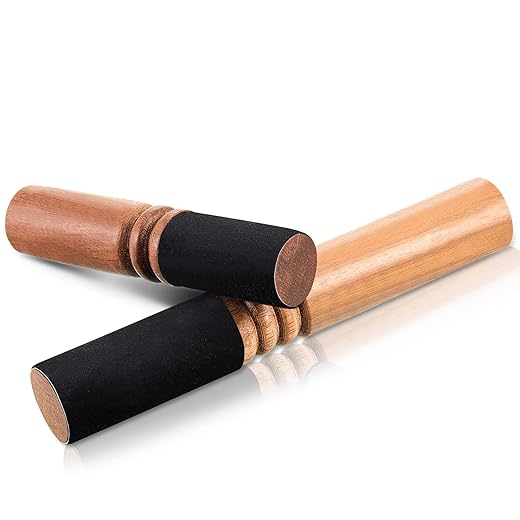
- a mallet,
- a small cushion or rest
Your essential toolkit consists of just a few carefully chosen items: quality mallets (rubber or suede work beautifully for beginners), a cushion or padded ring to cradle your bowl, and optionally, a small cloth to protect delicate finishes.
This streamlined approach not only makes starting accessible but also allows you to focus on what truly matters – connecting with the sacred sounds. Furthermore, when choosing your first bowl, remember to handle it personally whenever possible. The bowl should feel balanced in one hand and stable on its cushion, creating a harmonious relationship between you and your instrument from the very beginning.
Types of bowls and what they mean for sound
The universe of types of singing bowls opens before you like a garden of sonic possibilities.
Hand-hammered metal bowls, crafted from traditional bronze or the mystical “7-metal” alloy, carry the wisdom of generations within their walls. These ancient vessels produce layers of harmonic complexity that dance and weave through the air, creating a rich tapestry of healing frequencies. Meanwhile, machine-made bowls offer their own unique gifts, presenting cleaner, more predictable pitches perfect for focused meditation or blending with contemporary music.
Crystal bowls bring yet another dimension to your sound healing journey. These luminous instruments, often made from pure quartz crystal, sing with an ethereal clarity that resonates deeply with many practitioners. Additionally, Tibetan locally-made hand-hammered pieces carry special significance, embodying centuries of spiritual tradition and craftsmanship.
When selecting your bowl, consider what calls to your spirit: the complex harmonics of hand-hammered metal for deep healing work, or the pure, penetrating tones of crystal for chakra alignment and modern meditation practices.
Size, weight, and tone at a glance
Understanding the relationship between size, weight, and tone empowers you to make an informed choice that aligns with your healing intentions. Smaller bowls, measuring 4-6 inches, sing with bright, crystalline voices and shorter sustain – perfect for portability and quick energy clearing. However, the 7-9 inch range represents the beginner’s sweet spot, offering clear fundamental notes with manageable sustain that won’t overwhelm your developing practice.
Larger bowls, spanning 10 inches and beyond, ground you with deeper pitches and remarkably long sustain, though they require more strength to handle gracefully. Heavier bowls generally provide more sustain, allowing the vibrations to continue their healing work long after your mallet has left the rim.
When testing a bowl, listen carefully for a clear fundamental note that sings purely without clanging or rattling – this clarity indicates a well-crafted instrument that will serve your practice beautifully.
- 4–6″ — bright, short sustain; portable.
- 7–9″ — beginner sweet spot: clear fundamental, manageable sustain.
- 10″+ — deeper pitch, long sustain; heavier to handle.
Mallet, cushion, and what to avoid
Your choice of mallet profoundly influences the voice of your bowl, making this selection as important as the bowl itself.
- Rubber mallets produce crisp, articulate strikes that awaken the bowl’s full spectrum of overtones instantly.
- Suede or fabric-wrapped mallets create warmer, gentler tones perfect for rim-rubbing techniques that build slowly into sustained singing.
- Wood mallets, while offering sharp attack, require careful use – especially with delicate crystal bowls – and often benefit from protective wrapping.
Supporting your bowl properly ensures optimal resonance and protects both the instrument and your surfaces. A padded cushion or wooden O-ring rest allows vibrations to ring freely without dampening, creating the fullest possible sound.
Avoid bowls showing signs of damage such as cracked rims, sharp dents, or sloppy welds – these imperfections not only compromise the structural integrity but also produce poor sustain and unpredictable overtones that can disturb rather than heal.
Quick in-store or online checks
Whether shopping in-store or online, specific checks ensure you choose a bowl that will become a cherished companion on your healing path. Listen carefully to audio samples, noting both sustain length and the richness of overtones – these qualities reveal the bowl’s potential for deep healing work. Additionally, whenever possible, experience both striking and rim-rubbing techniques with your potential bowl; a quality instrument should produce pleasing tones through both methods.
- Listen to audio samples and note sustain length and overtone richness.
- Strike and rim-rub: do both if possible; a good bowl sounds pleasing both ways.
- Price guide: machine-made metal $50–170, hand-hammered beginner bronze $60–500+, single crystal bowls often $40–150.
Most importantly, try before you buy when possible, or choose sellers offering easy returns. This flexibility ensures your first bowl truly resonates with your unique energy and intentions, setting the foundation for a transformative sound healing practice.


Setting Up Your Space for a Clear, Comfortable Session
When you prepare to embark on a singing bowl sound bath journey, your environment becomes an essential partner in your healing experience. Indeed, the space you create directly influences how deeply the therapeutic vibrations can penetrate your being. Start by choosing a room where you naturally feel at ease—perhaps your bedroom, living room, or even a quiet corner that calls to your spirit. Remember, this sacred space doesn’t need to be perfect; rather, it needs to resonate with your intention for healing and transformation.
Furthermore, consider the energetic flow of your chosen area. Open windows briefly to invite fresh air and release stagnant energy. As you do this, set a clear intention for your sound bath session. Whether you seek stress relief, emotional balance, or spiritual connection, let this purpose infuse every corner of your space. This simple act of mindful preparation amplifies the healing power of your upcoming sonic journey.
Room acoustics: tame reflections, not the resonance
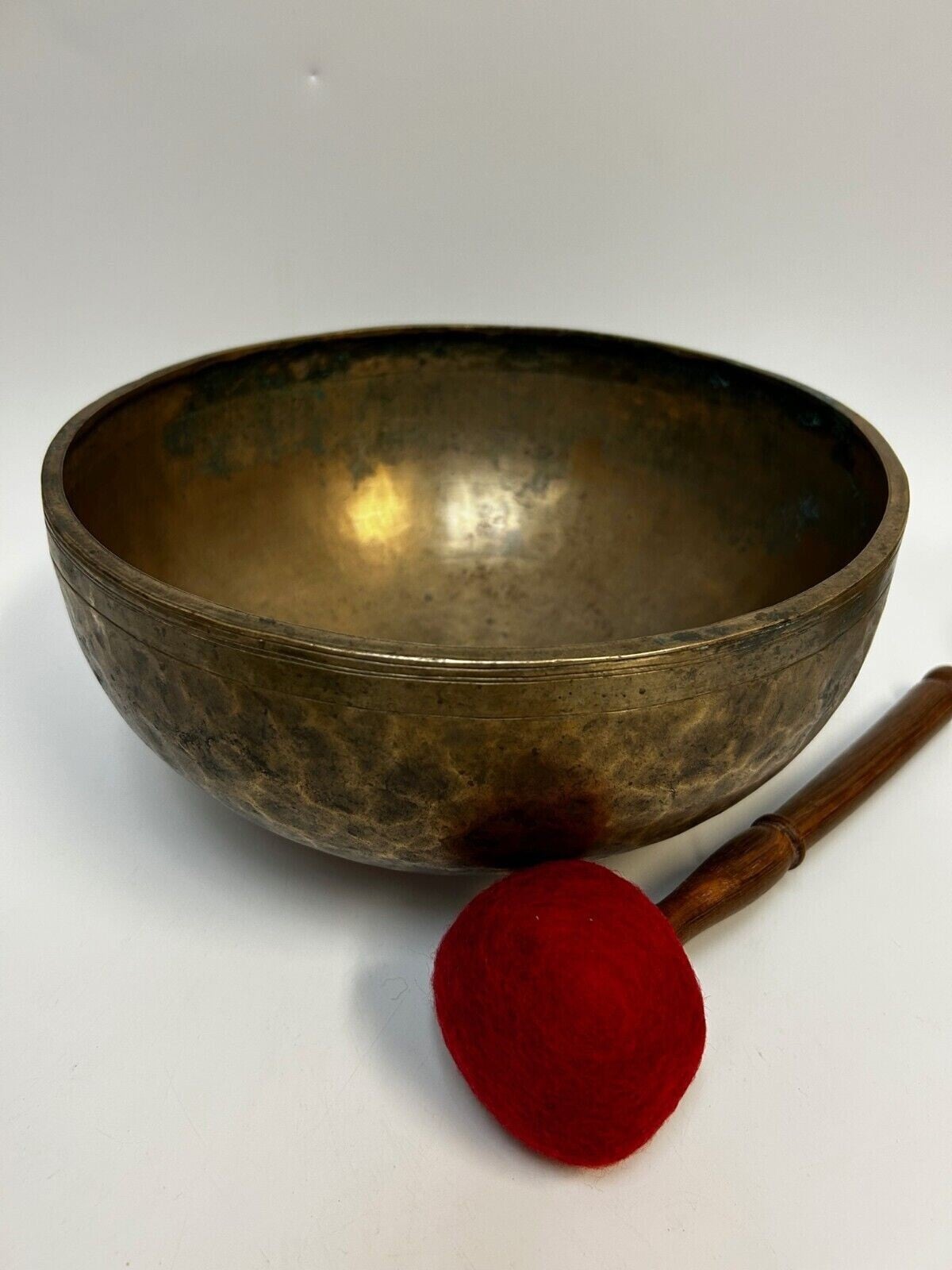
Now, let’s create the physical foundation for your singing bowl sound bath experience. First, arrange comfortable seating or lying options—a yoga mat with supportive cushions, a meditation pillow, or even your bed can serve beautifully. Position yourself where you can fully relax without physical distractions. Additionally, gather soft blankets and perhaps an eye pillow, as body temperature often drops during deep relaxation states.
Choose a room that feels calm, not cavernous. Hard floors, bare walls, and glass windows create bright, fluttery reflections that make bowls sound harsh; soft furnishings (rugs, curtains, couch cushions) absorb those high‑frequency bounces and reveal the bowl’s true sustain. Small rooms can feel intimate but will emphasize early reflections; larger rooms with some soft surfaces let overtones bloom. Tip: if your bowl sounds “pingy,” add a rug or hang a blanket on the nearest reflective wall.
Lighting and atmosphere
Next, address the sensory elements that enhance your journey. Dim the lights or use candles to create a gentle, flickering ambiance that soothes your nervous system. Consider incorporating aromatherapy through essential oils like lavender or frankincense, which naturally complement the vibrational healing of your sound bath. These thoughtful touches transform an ordinary room into a temple of tranquility, preparing your body and mind to receive the ancient wisdom carried within each singing bowl tone.
Aim for dim, even light. Warm lamps or a low‑wattage bulb are less distracting than overhead fluorescents. A small candle or salt lamp provides a focal point without glare. If you like guided timing, a soft bedside lamp with a timer is handy.
Seating, placement, and posture
Finally, arrange your singing bowls or sound bath tools with intention and care. If you’re playing the bowls yourself, position them within comfortable reach, ensuring you can strike or circle them without strain. Alternatively, if you’re experiencing a recorded sound bath, place your speakers strategically to create an immersive sonic envelope around you. Test the volume beforehand—the sound should feel enveloping yet gentle, never overwhelming your senses.
Minimize potential interruptions by silencing phones and informing household members of your practice time. This boundary-setting honors both your healing journey and the sacred tradition of sound therapy. As you settle into your prepared space, take three deep breaths, allowing gratitude to fill your heart. You’ve successfully created a sanctuary where ancient vibrations can work their transformative magic, guiding you toward balance, clarity, and inner peace.
Props to have within reach
- Cushion or folded blanket for the bowl
- Mat or yoga bolster for your body (Manduka eKO or a simple yoga bolster works)
- Timer or phone with gentle chime (Insight Timer, Time Timer, or a soft alarm)
- Small water bottle
Quick session checklist and safety
- Silence notifications and put the phone face down.
- Set a 20–30 minute target and a gentle alarm.
- Ventilate the room briefly before you start.
- Use a stable surface for bowls; avoid edges and shaky tables.
- Be mindful of volume and vibration around infants, elderly guests, or curious pets — move them to a safe distance if needed.
These steps make your first sessions predictable, comfortable, and repeatable — the backbone of a sustainable practice.
Basic Techniques: Striking, Rim-Rubbing, and Controlling Tone
How to hold the mallet
Hold the mallet with a light but steady grip — think “steady pencil,” not a hammer. Rest your forearm and wrist so strokes come from a relaxed rotation, not a stiff shoulder. If you’re using a larger suede or felt mallet, cup it lightly; for a naked-wood mallet, soften your grip to avoid harsh knocks.
Striking: clear note and transitions
Begin with the striking technique, this creates an immediate connection between you and your singing bowl. First, hold your bowl gently in your non-dominant hand, allowing it to rest on your fingertips or palm—never grasp it tightly, as this dampens the vibration. Next, take your mallet and strike the bowl’s rim at a slight angle, using a motion similar to ringing a dinner bell.
The secret to masterful striking lies in understanding the relationship between force and resonance. Start with gentle taps, gradually increasing your strength until you find the sweet spot where your bowl sings its fullest song. Remember, each bowl possesses its own personality—some prefer delicate touches, while others bloom under confident strikes.
Through patient practice, you’ll develop an intuitive feel for what your bowl desires, transforming each strike into a sacred conversation between you and this ancient instrument. Striking your singing bowl gives you a clean, defined note for openings and transitions.
Steps:
- Aim for the outer third of the bowl (near the rim) or the bowl’s side — not the dead center.
- Use a quick, controlled tap — medium force. Too soft: inaudible; too hard: metallic clang.
- Let the bowl resonate; don’t damp it with your fingers right after the strike.
Real-world note: a suede-wrapped mallet produces warmer, longer sustain than raw-wood hits, which are brighter and crisper.
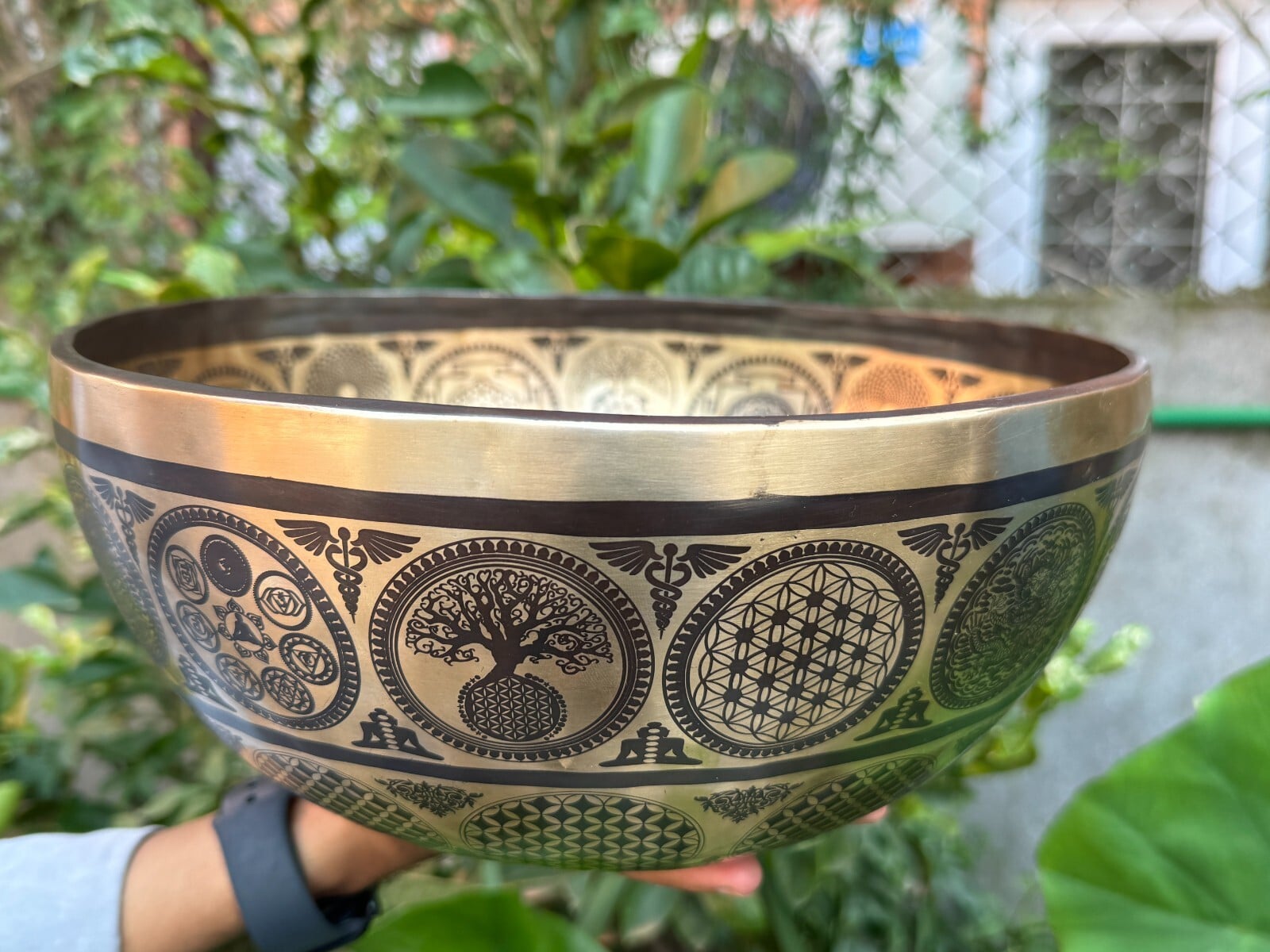
- 12-inch Tibetan Singing Bowl designed for meditation, yoga, and chakra balancing.
- Produces harmonious vibrations to elevate spiritual practices.
- Handcrafted by skilled artisans in the Himalayas for quality and authenticity.
- Ideal for relaxation and connecting with your inner self.
- Features intricate designs and symbols, making it a beautiful decorative piece.
- Suitable for personal use or as a thoughtful gift for wellness enthusiasts.
Rim-rubbing (playing the rim) — step-by-step
While striking creates instant gratification, rim-rubbing unveils the sustained magic within your singing bowl. Begin by holding the mallet like a pencil, maintaining consistent pressure as you trace the bowl’s rim in a clockwise direction. Initially, you might hear only friction, but persevere—suddenly, the bowl will catch the vibration and begin its mesmerizing song.
Successful rim-rubbing requires finding the perfect balance between speed, pressure, and angle. Press too hard, and you’ll create harsh overtones; too soft, and the sound won’t sustain. Move too quickly, and the vibration becomes chaotic; too slowly, and it fades away. Through dedicated practice, you’ll discover that rim-rubbing becomes a moving meditation, where your circular motion creates an endless stream of healing vibrations that can transform any space into a sanctuary.
Rim-rubbing creates continuous resonance — the core of a sound bath.
- Angle the mallet about 10–20 degrees so the wrapped face contacts the rim slightly off-center.
- Apply even, light pressure so the mallet stays in contact without dragging.
- Move in smooth, circular strokes around the rim at consistent speed; imagine painting a thin ring.
Start slow; the bowl will “unlock” into a fuller tone as you maintain motion. Picture coaxing a stuck jar lid loose — steady, patient rotation wins.
Adjustments that change the sound
Ultimately, controlling tone transforms you from a player into a sound healer. By adjusting your striking force, mallet angle, and rim-rubbing speed, you orchestrate a symphony of frequencies. Experiment with different mallets—wooden ones produce earthier tones, while felt-wrapped mallets create softer, more ethereal sounds.
Advanced tone control involves understanding how your bowl’s size, metal composition, and shape influence its voice. Larger bowls generally produce lower, grounding frequencies, while smaller ones sing higher, more activating notes. By mastering these variables, you create intentional sound baths that guide participants through specific energetic journeys, making each session a unique healing experience.
- Speed: faster = louder, more overtones; slower = purer fundamental.
- Pressure: more pressure = fuller volume but risks stalling; less = airy, less sustain.
- Contact point: closer to the rim = brighter; farther down = darker, more fundamental.
Troubleshooting quick fixes
- Rattling: loosen your grip, slow down, or switch to a softer mallet.
- “Stolly” (choppy) sound: uneven speed or jerky wrist — practice smooth, continuous strokes.
- Weak tone: try a heavier or suede mallet, slightly faster strokes, or place the bowl on a firmer cushion to improve coupling.
These mechanical habits — grip, angle, and steady motion — are the practical foundation. Practice with patience; small adjustments yield big differences.
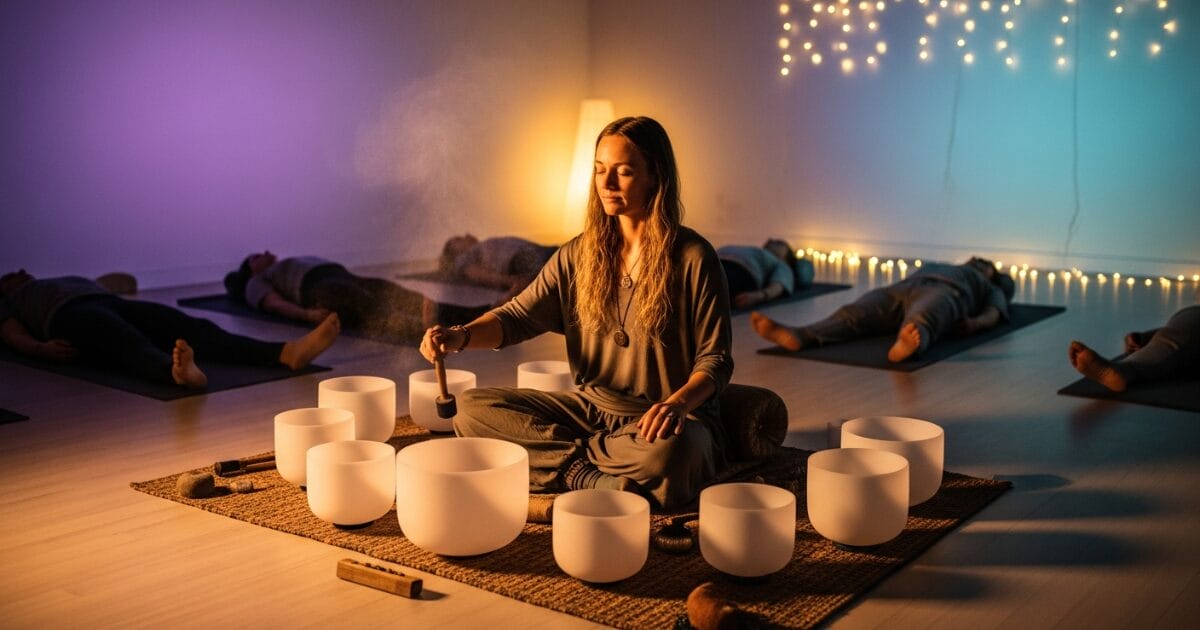
A Simple, Step-by-Step Singing Bowl Sound Bath Sequence As Host
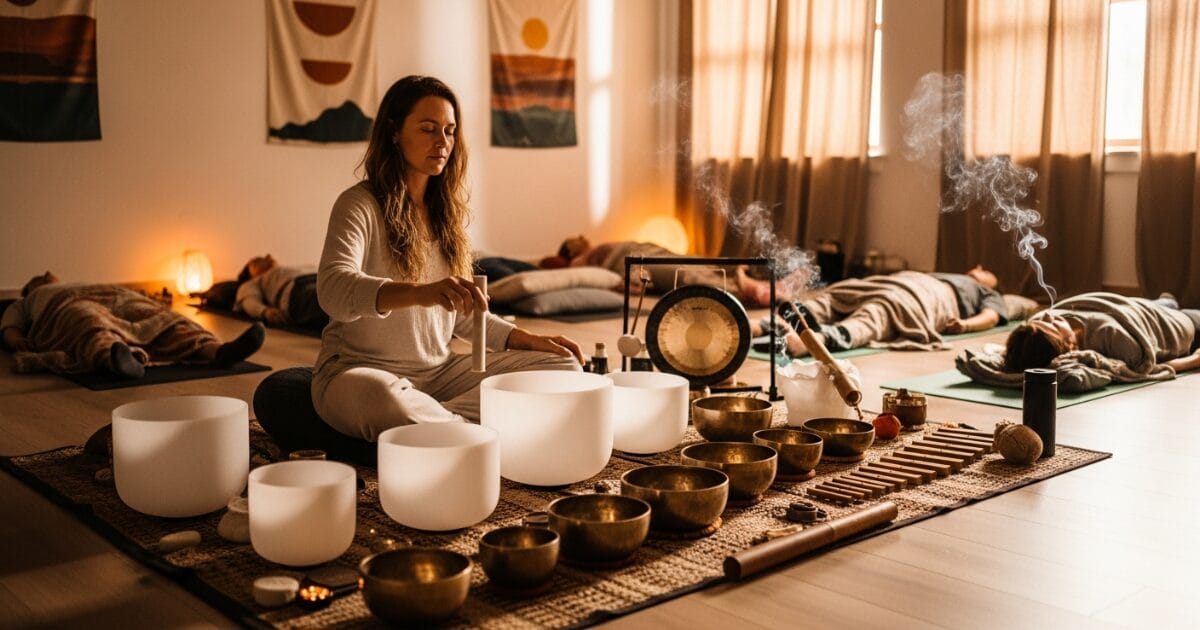
Hosting a sound bath is more than playing instruments—it’s about creating a sanctuary where transformation unfolds through vibration. First, transform your chosen space into a healing haven. Clear the energy by opening windows for fresh air circulation, then mindfully arrange comfortable mats or blankets in a semicircle facing where you’ll position yourself with your singing bowls. Light candles or dim the lights to create a warm, womb-like atmosphere that immediately signals to participants they’re entering sacred space.
Prepare your instruments with intention. Arrange your bowls within easy reach, ensuring you can flow seamlessly between them without disrupting the meditative atmosphere. Place water nearby to stay hydrated, and consider having a soft shawl or blanket for your own comfort. Remember, your energy sets the tone for the entire experience. When you feel nurtured and prepared, this radiates outward, creating a container of safety and trust for your participants.
Setup and timing overview
Understanding the rhythm of your sound bath creates a journey that feels both expansive and perfectly contained. Plan for approximately 30-35 minutes total, allowing participants to sink deeply into the experience without feeling rushed or restless. This timeframe honors both the modern attention span and the ancient need for meaningful ritual.
Begin by welcoming participants 5-10 minutes before starting, giving them time to settle onto their mats and transition from the outside world.
You may also like to share a brief overview of what they can expect, emphasizing that there’s no wrong way to experience a sound bath. Encourage them to close their eyes or soften their gaze, breathe naturally, and simply receive. This pre-session connection builds trust and helps nervous systems begin to regulate even before the first sound emerges. Your presence during this settling time is medicine itself—be fully present, breathe deeply, and embody the calm you wish to create.
Grounding (2–3 minutes)
Now, guide your participants into grounding with these gentle words: “Allow your body to melt into the earth beneath you. Feel the support of the ground, holding you completely. Take three deep breaths with me—inhaling peace, exhaling any tension you’ve been carrying. Beautiful. Now let your breath return to its natural rhythm. Notice where your body touches the ground. Feel the weight of your bones settling, your muscles softening, your whole being surrendering to this moment of rest.”
Continue with loving presence: “As we begin this journey together, know that you are exactly where you need to be. The sounds that will soon embrace you are ancient healers, here to support your highest good. There’s nothing you need to do except receive. If emotions arise, let them flow. If you drift into sleep, perfect. If visions or insights emerge, welcome them. You are safe here, held in this container of sound and love.”
This grounding creates the energetic foundation for all that follows. Key moments for your grounding are:
- Have participants lay down on a mat or cushions, hand by their sides.
- Get participants to close their eyes, breathe in for 4, out for 6, repeat twice.
- Introduce the first strike: aim the mallet at the outer third of a bowl, medium force. Let it ring. Listen for 30–45 seconds before touching the rim.
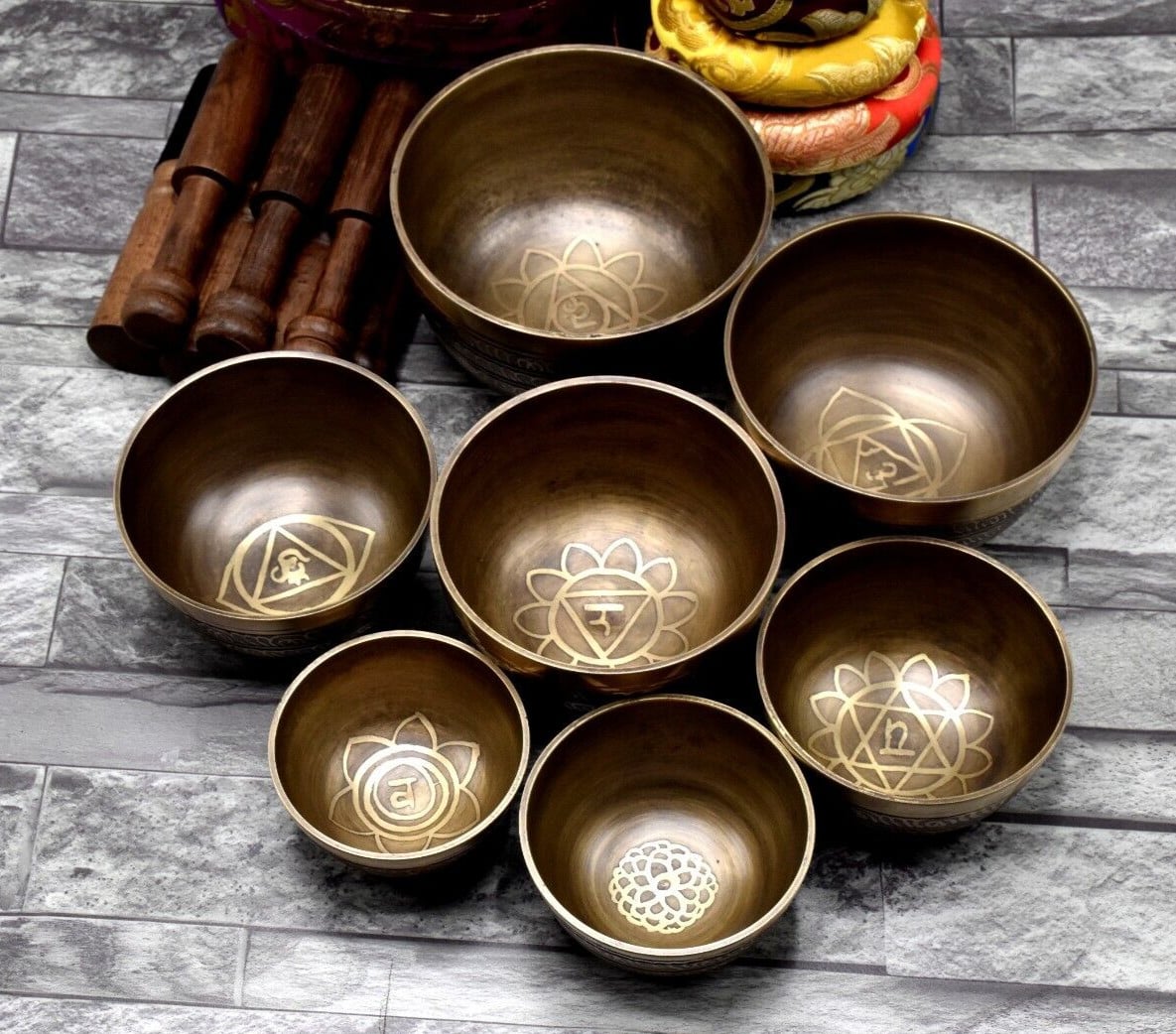
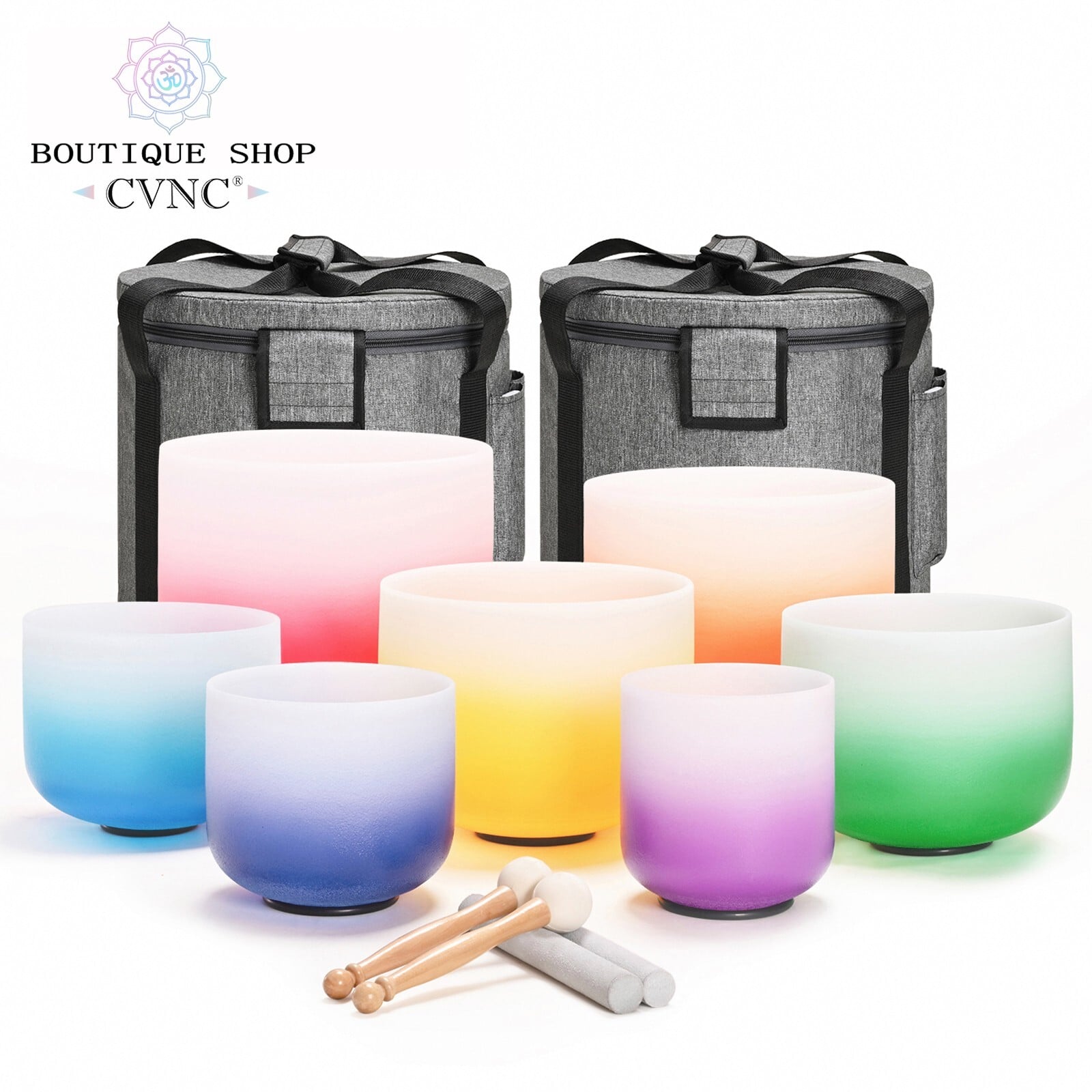
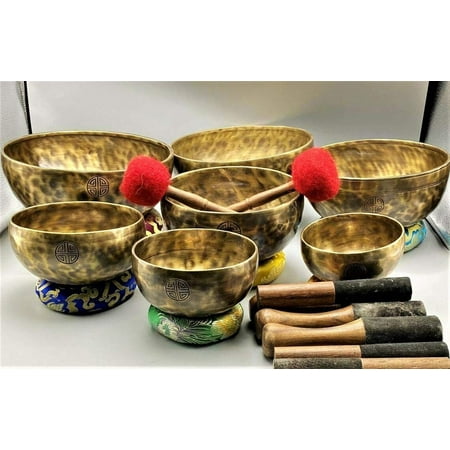
- Set of 7: Includes a complete set of Tibetan singing bowls for chakra healing.
- Chakra Balancing: Specifically designed to support the balancing and unblocking of chakras.
- Energetic Restoration: Aids in restoring balance within the energetic body.
- Natural Materials: Crafted from natural materials for authentic sound and resonance.
- Holistic Healing: Ideal for meditation, relaxation, and spiritual practices.
- Versatile Use: Suitable for personal use or as a thoughtful gift for wellness enthusiasts.
Three rounds of bowl work (each 4–6 minutes)
Begin your first round by introducing a single bowl with a gentle, steady rhythm. Start softly, like dawn breaking, and gradually allow the sound to bloom. Move the mallet slowly around the rim, creating a continuous drone that wraps around your participants like a sonic embrace. After establishing this foundation, introduce gentle strikes every 30-45 seconds, sending waves of vibration through the space. This first round is about opening—opening the energy field, opening the heart space, opening to possibility.
Transition gracefully into your second round by selecting a bowl with a different tone, perhaps deeper or more resonant. Layer this new frequency with the lingering vibrations of the first, creating a harmonic conversation between rounds. During this middle passage, vary your playing techniques—alternate between rimming and striking, experiment with different pressures and speeds. This is where the journey deepens, where participants often report traveling to other realms or experiencing profound releases. Trust your intuition here; let the bowls guide you rather than forcing a predetermined pattern.
For your final round, choose a bowl that feels completing—perhaps higher in pitch to lift the energy, or one with particularly sweet overtones. Play with more space between sounds, allowing silence to become part of the music. These moments of quiet are powerful integration points where the vibrations settle deeply into cells and consciousness. As this round draws to a close, gradually soften your playing, like a gentle tide receding, preparing the space for the sacred pause that follows.
Round structure (repeat 3×):
- Strike-to-listen (30–60 sec): single strike, observe overtones and body sensations.
- Rim-play (2–3 min): begin rim-rubbing. Maintain steady strokes — about one full revolution every 3–4 seconds (count “1–2–3–4” in your head). Keep even pressure; if the tone wavers, slow down.
- Ambient pause (30–60 sec): stop rubbing, allow resonance and silence.
When to introduce additional bowls:
- 2 bowls in round 2: start Bowl B at minute 2 of Round 2 — overlap with 2–3 rim strokes so sounds blend. Match the tempo of your first bowl.
- 3 bowls in round 3: bring Bowl C in during Round 3, again overlapping 2–3 strokes to avoid abrupt cuts.
Pacing cue: when the sustain drops, either re-strike (clean tap) or increase stroke speed briefly; don’t slam the bowl.
Closing settling (2–3 minutes)
Begin your closing and settling by reverting to a single bowl with a gentle, steady rhythm. Starting with louder tones gradually moving to slower, quieter tones, like the sun setting, and gradually allow the sound to cease. Do this by striking and then straight away start moving the mallet around the rim. This will add a vibrating drone that envelops your participants like a blanket. After establishing this drone, introduce gentle strikes every 30-45 seconds as the drone fades, sending waves of ever slower vibration through the space. Aim for at least 3 strikes, with each of them using a lighter touch. Allow 15 -20 seconds of complete silence before adding one final low strike on a large bowl. This final low strike will dampen the energy field, settle the heart space, and bring participants back to the present.
Guide participants back with these tender words: “Begin to deepen your breath, gently awakening your body. Wiggle your fingers and toes, feeling the aliveness returning to your limbs. When you’re ready, draw your knees to your chest, giving yourself a loving hug. Roll to your right side, resting here for a moment in this fetal position of rebirth.” This closing sequence honors the journey while gently facilitating the return to ordinary consciousness.
Complete the ceremony with gratitude: “When you feel ready, slowly bring yourself back to a comfortable seated position. Scan your body and feel the vibrations still working for you, Place your hands at your heart center. Together, let’s take one deep breath of gratitude—for this time, for these healing vibrations, for your courage in showing up for yourself. Thank you for sharing this sacred space. May the vibrations continue to work their magic as you return to your day. Namaste.” This closing blessing seals the healing and sends participants forward feeling whole, renewed, and deeply nourished.
- Reduce volume: three soft strikes spaced 20–30 seconds apart.
- Final low strike on a larger bowl.
- Rest, moving from prone to seated, in silence scan body from head to toes.
- Hands at heart center, giving gratitude.
- Finish with three slow breaths, then open your eyes when ready.
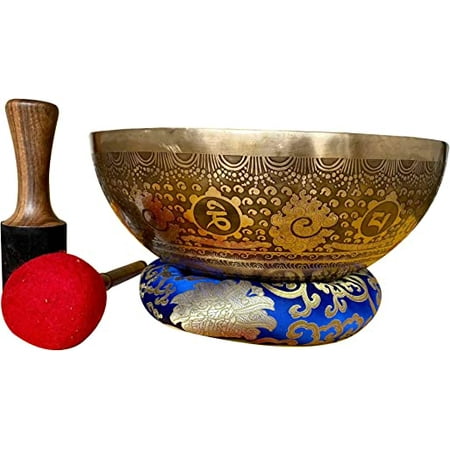
14 Master Healing Mantra Carved Meditation Tibetan Singing Bowl Tibetan Bowls free singing bowl cushion striker and drum stick.
Experience the ancient healing power of the 14″ Master Healing Mantra Carved Meditation Tibetan Singing Bowl. This exquisite bowl produces soothing sounds that promote inner peace for the body, mind, and soul. This singing bowl is meticulously hand-hammered by skilled artisans in Nepal.
Featuring a classic bronze patina this PREMIUM bowl sings effortlessly, offering great sustain that resonates beautifully. It delivers a full middle-range tone complemented by a sweet, constant tone. A striker is included to enhance your experience. This Tibetan Singing Bowl is perfect for meditation, healing, and relaxation.

Techniques for Blending Multiple Bowls and Managing Transitions
When you step into working with multiple singing bowls, you’re embarking on a journey that transforms simple vibrations into a profound symphony of healing. The art of blending bowls during a sound bath isn’t merely about creating pleasant sounds—it’s about weaving an energetic tapestry that supports deep transformation and healing. As you learn to orchestrate these ancient instruments together, you’ll discover that each combination creates its own unique vibrational signature, capable of touching hearts and shifting consciousness in remarkable ways.
The foundation of successful multi-bowl work lies in understanding how different frequencies interact. Just as in nature, where harmony emerges from apparent chaos, your singing bowls can either complement each other beautifully or create uncomfortable dissonance. By developing your ear for these subtle relationships, you’ll gain the confidence to create soundscapes that transport your listeners to states of deep peace and revelation. This skill becomes your gateway to offering truly transformative sound bath experiences.
Pairing and listening quick-check
Before you commit to any bowl combination, implementing a simple yet powerful pairing and listening quick-check will save you from potential sonic turbulence. Start by striking each bowl individually, allowing their pure tones to ring out fully. Then, strike them together and listen with focused attention. What you’re seeking is a steady combined tone that indicates a harmonious match—this is your green light for a beautiful pairing.
Pay special attention to the phenomenon of “beats”—those slow, rhythmic pulsations that occur when two similar frequencies interact. When you hear slow throbbing beats (ideally 1-2 Hz or less), you’ve discovered close-but-not-identical pitches that can actually enhance the mystical quality of your sound bath. However, if harsh dissonance assaults your ears, honor this message from the bowls and try a different pairing.
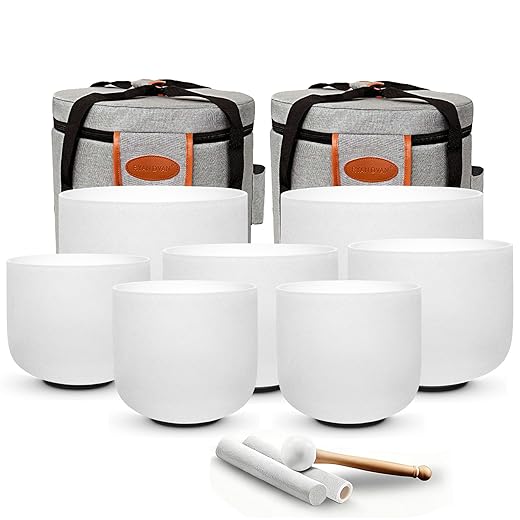
Many experienced practitioners find magic in pairing a 432-440Hz Tibetan bowl with crystal bowls like the RYAN DVAN set, creating a beautiful marriage between the complex metal overtones and the pure, sustained crystal tones.
Transition methods you can use immediately
Mastering transition methods transforms you from someone who simply plays bowls to a true sound alchemist.
The fade-in technique serves as your gentle introduction—begin playing a bowl at barely audible volume using soft mallet strokes or delicate rim work, then gradually increase the intensity over 6-12 seconds. This approach mirrors the way dawn slowly brightens the sky, creating a natural and comforting progression that your listeners’ nervous systems can easily integrate.
The call-and-response method brings conversational dynamics to your sound bath, creating an engaging dialogue between bowls. Alternate 1-2 strikes between bowls, allowing Bowl B to respond to Bowl A’s call, then let both sustain together briefly. This technique particularly shines when you’re working with bowls that have complementary but distinct personalities.
For seamless transitions, employ the crossfade technique: while rim-playing Bowl A, begin introducing staggered strikes on Bowl B while gradually easing off A’s rim strokes. This creates a flowing river of sound where one current naturally gives way to another.
Controlling dynamics and overlap
Successfully controlling dynamics in multi-bowl work requires both technical skill and intuitive sensitivity. Choose your tools wisely—softer mallets made from suede or felt combined with short, controlled rim strokes will help you maintain friendly resonance between bowls. When your bowls share harmonic relationships like octaves or fifths, embrace their natural affinity by allowing generous overlap, creating warmth and depth in your soundscape.
Understanding when to separate and when to blend becomes crucial for masterful sound bath facilitation. If your bowls occupy more distant harmonic territories, practice stopping one completely before introducing the next to avoid muddy or conflicting frequencies.
When you encounter those pleasant slow beats that add a mystical quality to your sound, let them continue their dance. However, if fast, uncomfortable beats emerge, reduce the overlap immediately or shift your mallet technique to find a sweeter spot. Remember, you’re the conductor of this vibrational orchestra—every choice shapes the journey.
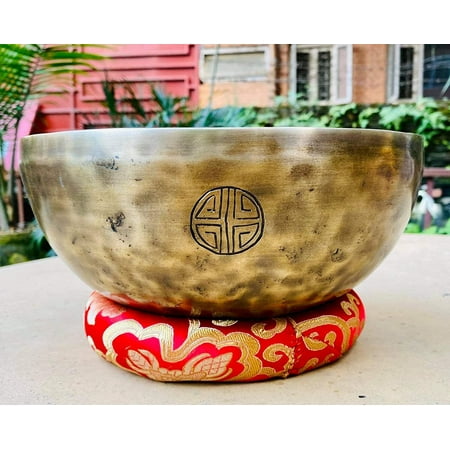
Key Features:
- Made from seven sacred metals, each corresponding to the seven planets.
- Historically used by high lamas for rituals and offerings to deities, believed to aid in achieving higher consciousness.
- Special hand-painted design, featuring auspicious symbols on the outer surface.
- Ideal for gifts or for enhancing personal shrines.
- Commonly used for yoga, meditation, and spiritual healing practices.
- Sound quality is meticulously checked before shipping.
Spatialization and monitoring
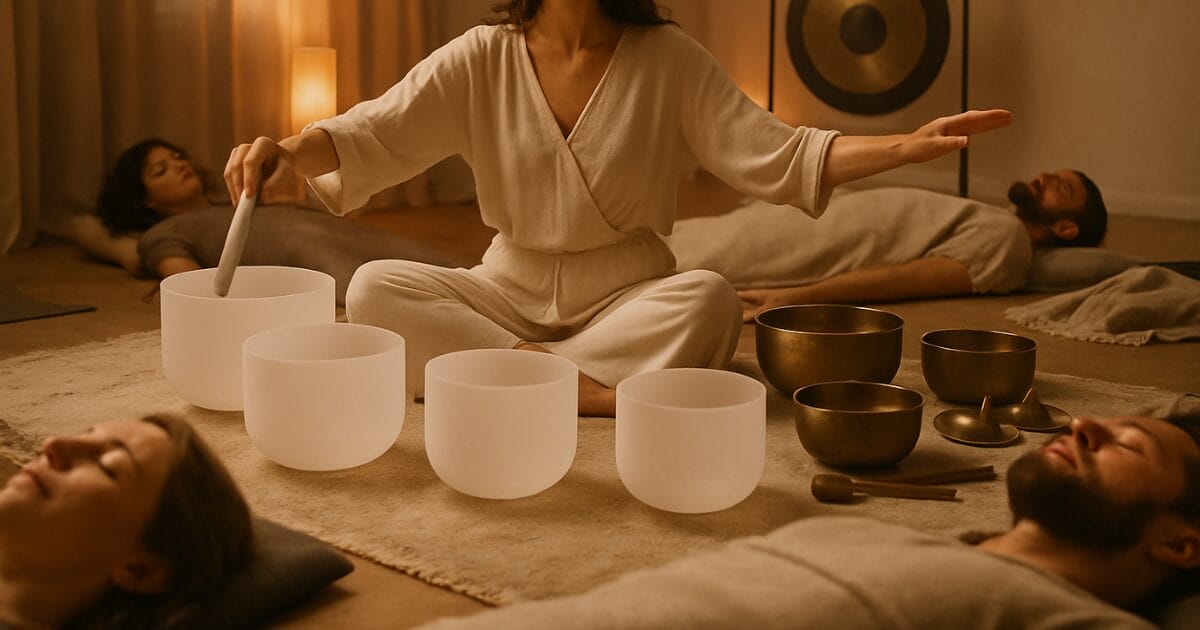
Transform your sound bath from a flat experience into a three-dimensional journey by thoughtfully considering spatialization. Move bowls around the body or throughout the room to create depth and movement—bringing bowls closer intensifies their presence while positioning them farther away creates an ambient, ethereal quality. When facilitating sessions for groups, stagger bowl placement around participants to envelop them in a cocoon of healing vibrations.
For those ready to elevate their practice through recording or professional facilitation, proper monitoring becomes essential. Position a stereo pair or small condenser microphone (like the Audio-Technica AT2020) slightly off-center from your largest bowl to capture the full spectrum of harmonics. Use closed-back headphones to monitor your work, catching subtle beats and avoiding latency issues that could disrupt your flow. Maintain healthy headroom levels between -6 to -12 dB, and stay alert for frequency masking that signals it’s time to simplify your arrangement. This technical awareness, combined with your intuitive gifts, creates sound baths that resonate long after the last vibration fades.
Troubleshooting, Safety, and Aftercare for Sustainable Practice
Every sound healer encounters moments when their sacred bowl seems to resist its natural song. Rather than viewing these as setbacks, consider them invitations to deepen your understanding and refine your practice.
The most common issue practitioners face is that unwanted metallic “ping” during rim rubbing. This jarring sound often signals that your mallet position needs adjustment—simply move it 1-2 centimeters higher or lower along the rim, and watch how the tone transforms into something more harmonious.
Additionally, choppy or uneven tones frequently emerge when we’re holding too much tension in our hands or using incompatible tools. Switch to a softer-wrapped mallet with suede or felt covering, or experiment with supporting your bowl differently. Sometimes, shifting from a flat palm to fingertip support creates dramatic improvements in overtone quality. Remember, these trouble shooting moments aren’t failures—they’re opportunities to develop a more intuitive relationship with your instrument.
Troubleshooting common problems
- Metallic “ping” when you rub the rim: move the mallet 1–2 cm lower or higher along the rim; switch to a softer-wrapped mallet (suede/felt) or soften your stroke pressure.
- Uneven or choppy tone: try a slightly heavier or lighter mallet, or support the bowl differently (use your fingertips rather than a flat palm); small pressure shifts change overtones dramatically.
- Unwanted rattling or buzz: inspect for loose parts (base cushions, rivets on decorative mounts, or a split mallet head). Place the bowl on a denser cushion like a wool ring to stop sympathetic rattles.
- Visible damage (hairline cracks, chips): stop intense play and get a professional opinion — continued use can worsen fractures.
These exquisite singing bowls are handcrafted during the Full Moon, harnessing the subtle lunar energy to create powerful healing vibrations. Each bowl is meticulously selected through sound testing to ensure optimal healing properties, resulting in exclusive masterpieces designed for long-lasting and resonant sound.
Historically, high lamas utilized these Tibetan bowls as ritual offerings to their deities, with some believing they were used to facilitate journeys to higher levels of consciousness. Beautifully crafted in Nepal, these singing bowls are not only a tool for relaxation but also a symbol of peace and tranquility in Tibetan Buddhism. Experience the serene sounds and healing benefits of the Full Moon Singing Bowls today!
Safety — for you and listeners
Your body serves as the foundation for every healing session, making proper posture essential for sustainable practice. Sit upright with relaxed shoulders, allowing your spine to stack naturally while keeping your chest open and receptive. Hold bowls at waist height or rest them on a supportive lap cushion to prevent neck strain that often develops from craning forward. This aligned position not only protects your physical body but also creates an energetic channel for the sound vibrations to flow through you more effectively.
Maintaining good posture enhances your breathing capacity, which directly influences the quality of sound you produce. When your diaphragm has room to expand fully, you naturally create more grounded, centered tones. Practice this alignment daily, even outside your sound sessions, to build muscle memory that supports your long-term practice. Your future self will thank you for establishing these healthy habits early in your journey.
Aftercare and maintenance
Your singing bowls deserve the same reverence you bring to your practice sessions. Develop a simple aftercare routine that becomes as natural as breathing. After each use, gently wipe your bowl with a soft, dry microfiber cloth to remove oils and moisture from handling. For deeper cleaning, use a slightly damp cloth with mild soap, then dry immediately to prevent oxidation or water spots.
- Cleaning: wipe with a soft, dry microfiber after each use; for grime, use a damp cloth with mild soap and dry immediately. Avoid abrasive cleaners.
- Storage: keep in a padded box or on a soft shelf away from moisture and direct sun. Protect the rim with a ring cushion or soft cloth when stored.
- Re-wrapping mallet heads: remove old wrap, glue new fabric tightly (contact cement or hot‑melt), and let cure before use.
- Professional service: seek tuning or repair for persistent tuning issues, cracks, or structural damage — instrument repair shops or the original maker are best.
These preventive measures ensure your bowls continue singing their healing songs for years to come.
Track progress and next steps
Documentation transforms casual practice into conscious evolution. Keep a simple log noting the date, which bowl you used, mallet type, techniques explored, and how the session felt energetically. Include any feedback from listeners and personal observations about tone quality or physical sensations. Over weeks and months, patterns emerge that guide your development—you’ll discover which combinations create the most profound effects and which approaches need refinement.
As you track progress consistently, you’ll naturally identify areas for expansion. Perhaps you’re ready to join a local sound-bath community, attend specialized workshops, or explore guided recordings that introduce new techniques. Let your practice journal become a roadmap for growth, celebrating small victories while staying curious about what’s possible. Remember, mastery isn’t about perfection—it’s about showing up consistently and remaining open to the wisdom each session offers.




Helpful article but I wanted more on safety and aftercare. For example: how often is too often for a full sound bath? I love the Authentic Nepalese Tibetan Singing Bowl Gift Set aesthetic, but worried about overplaying smaller metal bowls. Also, any recs for cleaning/maintaining them without damaging etching or finish?
I baby my Nepalese bowls — never use metal polish. A little olive oil on a cloth can bring back shine without harming designs.
Thanks — super practical. The olive oil tip is new to me, will try on an inconspicuous spot first.
Also store them on a cushion (like the zafu or a ring cushion) to avoid dents. Overplaying isn’t likely to ‘break’ them but repeated hard strikes can warp thin rims.
Great questions. Frequency: short daily practices (10–20 min) are fine; full longer sound baths once or twice a week is sensible for sustainable practice. For maintenance: wipe with a soft dry cloth; if you need to remove grime, use a damp cloth and mild soap, dry immediately. Avoid abrasive cleaners on etched bowls.
And if you’re teaching or using them with others, rotate bowls to avoid stressing any single bowl repeatedly.
Nice article. The rim-rubbing section was helpful but I’m still a bit lost on controlling tone — sometimes my bowl sounds airy and then suddenly rings too loud. I own a Handmade Tibetan Etched Singing Bowl Meditation Set and a cheap mallet. Would upgrading to a proper mallet help, or is it mostly about technique?
Both matter. A better mallet (felt-wrapped or leather) gives cleaner contact and steadier friction, which helps control sustain. Technique-wise, keep a steady wrist rotation and avoid pressing too hard — that causes wobble in tone.
Upgrading helped me a lot. Also check the bowl’s placement — on a cushion vs palm makes a big difference in overtones.
Try the dual-size mallet if you haven’t. One side for strike, one for rim—stability skyrockets.
And when you hear that airy sound, try slightly increasing the speed of rim-rubbing while keeping contact pressure light. Small adjustments go a long way.
Loved the blending multiple bowls section — I had been randomly sweeping through tones before and it felt chaotic. A couple things that helped me:
1) Plan short, silent gaps between bowls to let the previous tone settle.
2) Use bowls tuned close in frequency (the chakra sets help with that).
3) Practice transitions sitting down first, then standing if you prefer movement.
Would be cool to see a short video demo linked next time!
Does anyone mix crystal and metal bowls? I have a 7-Piece 432Hz Frosted Chakra Crystal Singing Bowls set and a metal etched set — the overtones clash sometimes.
You can blend crystal and metal but be mindful of their attack and sustain differences — crystals can feel brighter and longer. Try placing them further apart in sequence or give more space when switching from crystal to metal to avoid harshness.
Fantastic tips, Hannah — those silent gaps are underrated. We may add a short demo video in an update, thanks for the suggestion.
Agree on sitting first. Standing adds micro-movements that mess with timing until you get used to it.
Start small, they said. It’ll be relaxing, they said. Uh-huh. Still woke up my cat with my first rim-rub session 😂
But seriously, the Dual-Size Tibetan Singing Bowl Mallet Pair is a game-changer. Using the larger end for rim-rub gave me a sustained tone much faster than I expected.
My dog loves it and falls asleep. Pets have varied tastes 😂
My neighbor actually knocked and asked if I was teaching whale language. So yes, our instruments are loud in the best way.
Haha — cats are the unofficial sound bath critics. Glad the dual mallet worked for you. If your cat keeps sabotaging sessions, try moving the cushion/stool to another room for practice.
Okay, long post incoming because I’m excited and a tiny bit obsessed 🙈
I bought the RYAN DVAN 7-Piece 432Hz Crystal Chakra Set after reading a review and tried the simple sequence from this article yesterday. It was surprisingly calming — the Sedona Buckwheat Zafu Meditation Cushion helped me sit steady and focus on transitions.
Two things: 1) My throat felt funny afterwards (in a good way?) and 2) blending multiple bowls is harder than it looks 😂. The section on managing transitions was a lifesaver — I rewrote the sequence to leave more space between chakra tones and it flowed so much better.
Anyone else felt that ‘buzz’ in the chest after a session?
Yup, the buzz is real and lovely. Glad the cushion helped — posture changes everything.
That’s totally normal — many people report feeling vibrations in the chest or throat as the sound resonates. Good call on spacing tones; don’t rush transitions when you’re starting out.
Really appreciated the step-by-step sequence — clear and not intimidating for a total beginner. I’m leaning toward the 8-Inch 440Hz Heart Chakra Frosted Crystal Bowl for my first bowl. Has anyone used that one specifically? Does it pair well with the Dual-Size Tibetan Singing Bowl Mallet Pair or is a single mallet better for learning?
Great pick, Laura — the 8-inch 440Hz bowl is a very approachable size. The Dual-Size mallet pair is actually handy: use the softer mallet for rim-rubbing and the firmer one for striking. It makes practicing both techniques easier without swapping gear.
I have that exact bowl! The softer mallet gives a smoother sustain for rim work. If you’re just starting, the pair is worth it — saved me from making weird sounds for a week 😂
Laura — I used the Dual-Size with my 8″ too. Start with the softer side and focus on consistent speed. You’ll notice tone improves after a few tries.
Quick Q: for the striking technique, should the mallet hit more towards the center or the rim? i’m def still making ‘ping’ noises 😂😅
Also try different mallet heads — felt gives warmer tone, wooden gives brighter ping. Find what you like and practice slowly.
Aim slightly off-center, not dead center and not right on the rim. A firm but gentle tap works; focus on a smooth rebound rather than a hammering motion.