


- What Are the Ayurvedic Doshas? The Foundation of Constitutional Medicine
- Understanding Your Prakriti: Your Unique Doshic Blueprint
- Vata Dosha: The Force of Movement and Creativity
- Vata Imbalance: Signs and Health Implications
- Balancing Vata: The Principle of Opposites
- Lifestyle Practices for Vata
- Pitta Dosha: The Force of Transformation and Intelligence
- Pitta Imbalance: Signs and Health Implications
- Balancing Pitta: Cooling the Inner Fire
- Lifestyle Practices for Pitta
- Kapha Dosha: The Force of Structure and Stability
- Kapha Imbalance: Signs and Health Implications
- Balancing Kapha: Stimulation and Lightness
- Lifestyle Practices for Kapha
- Discover Your Ayurvedic Dosha Type Quiz
- The Dynamic Nature of Doshas: Understanding Vikruti
- The Six Tastes: Balancing Doshas Through Diet
- Ayurvedic Food Combining: Optimizing Digestion
- Dinacharya: The Ayurvedic Daily Routine
- Recognizing and Addressing Doshic Imbalances
- Common Imbalance Patterns
- Advanced Doshic Concepts
- Ama: The Root of Disease
- Panchakarma: Advanced Doshic Purification
- Herbal Support for Doshic Balance
- Yoga and Pranayama for Doshic Balance
- Practical Application: Your 30-Day Doshic Balance Plan
- Working with an Ayurvedic Practitioner
- Common Questions About the Doshas
- Conclusion: Your Journey to Doshic Harmony
- Additional Resources
In an era where personalized medicine is gaining momentum, Ayurveda—the 5,000-year-old healing system from India—has been practicing individualized healthcare all along. At the heart of this sophisticated medical tradition lies the concept of the doshas: three fundamental bio-energetic forces that govern every aspect of our physical, mental, and emotional well-being.
This guide will unlock the science of the doshas, revealing how understanding these elemental forces can transform your health, prevent disease, and unlock your body’s innate healing capacity.
What Are the Ayurvedic Doshas? The Foundation of Constitutional Medicine
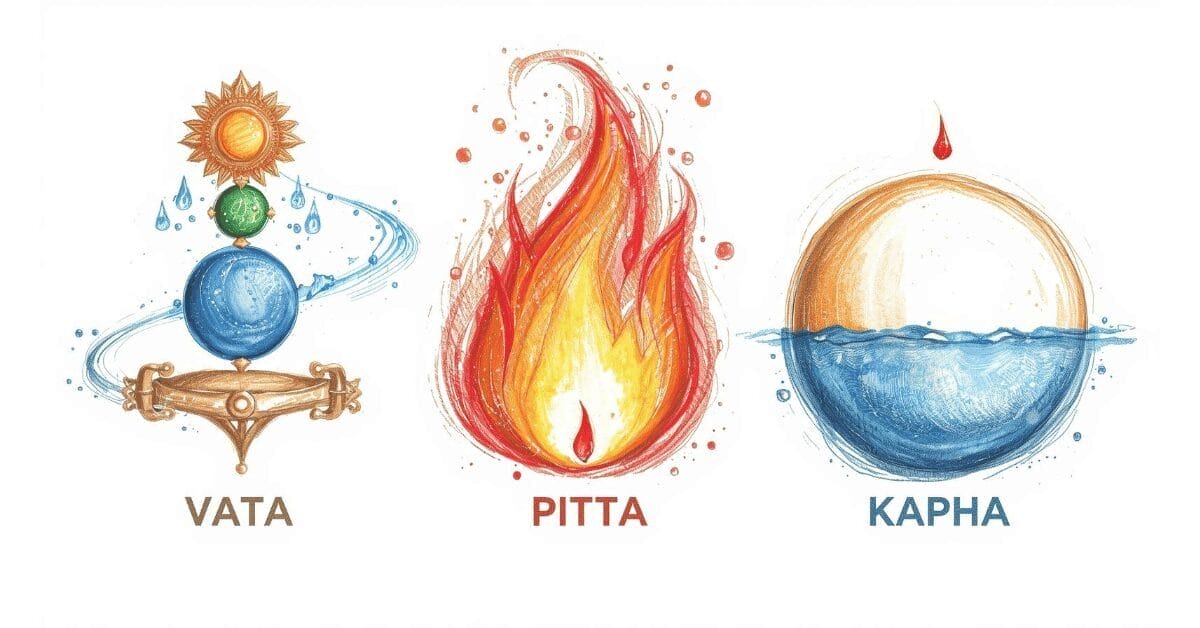
The doshas—Vata, Pitta, and Kapha—are subtle energy forces, or bodily humors, that operate within every cell of your body. They govern the functioning and decay of physiological processes, regulate your mental and emotional states, and determine your unique physical characteristics.
Think of the doshas as your body’s internal operating system. When this system runs smoothly and is in balance, you experience vibrant health, mental clarity, and emotional stability. When the system crashes or becomes corrupted (imbalanced), disease manifests.
The Tridoshic Theory: Nature’s Blueprint Within You
Ayurveda’s tridoshic theory teaches that the five elements of nature—space, air, fire, water, and earth—combine to form the three doshas:
| Dosha | Elements | Primary Qualities | Main Function |
|---|---|---|---|
| Vata | Space and Air | Dry, light, cold, rough, subtle, mobile, clear | Movement & Communication |
| Pitta | Fire and Water | Hot, sharp, light, liquid, spreading, oily | Transformation & Metabolism |
| Kapha | Water and Earth | Heavy, slow, cool, oily, smooth, soft, stable | Structure & Lubrication |
These elemental forces exist not only within us but throughout nature, explaining why seasonal changes, climate, time of day, and even life stages profoundly impact our health.
Understanding Your Prakriti: Your Unique Doshic Blueprint
What Is Prakriti?
Your prakriti is your inherent mind-body constitution—the unique combination of doshas you were born with. It’s determined at conception and remains unchanged throughout your life, serving as your personal health blueprint.
While everyone possesses all three doshas, they exist in different proportions, creating ten possible constitutional types:
- Single dosha dominant: Vata, Pitta, or Kapha
- Dual dosha dominant: Vata-Pitta, Pitta-Kapha, Vata-Kapha (and variations)
- Tridoshic: Equal balance of all three (rare)
Understanding your prakriti empowers you to make dietary and lifestyle choices that support your natural constitution rather than working against it.
Vata Dosha: The Force of Movement and Creativity
Elemental Composition and Qualities

Qualities (Gunas)
Dry (ruksha)
Light (laghu)
Cold (shita)
Rough (khara)
Subtle (sukshma)
Mobile (chala)
Clear/Empty (vishada)
Primary Functions in the Body
Vata is the dominant dosha, as without movement, the other doshas remain inert. It governs:
- Nervous system function and neural communication
- Breathing and respiratory rhythm
- Circulation of blood, lymph, and nutrients
- Elimination through colon, bladder, and pores
- Movement of muscles, joints, and thoughts
- Sensory perception and mental processing
- Communication and speech
Mental and Emotional Characteristics
When Balanced:
- Creative and imaginative
- Enthusiastic and energetic
- Quick-thinking and adaptable
- Spiritually inclined
- Excellent communication skills
- Flexible and open to change
- Vibrant personality
When Imbalanced:
- Anxiety and worry
- Fear and insecurity
- Restlessness and agitation
- Racing thoughts
- Difficulty focusing
- Indecisiveness
- Insomnia
- Overwhelm and burnout
Vata Physical Characteristics
Vata individuals typically display these physical attributes:
Body Structure:
- Thin, angular, wiry frame
- Light bone structure
- Difficulty gaining weight
- Prominent joints and veins
- Variable muscle development
Skin & Hair:
- Dry, rough, or cracked skin
- Darker complexion, tans easily
- Thin, frizzy, brittle hair
- Dry scalp
Physiological Tendencies:
- Variable, unpredictable appetite
- Irregular digestion
- Tendency toward constipation and gas
- Light, interrupted sleep
- Cold hands and feet
- Quick movements and speech

Vata Imbalance: Signs and Health Implications
Vata is responsible for approximately 80 different diseases in Ayurvedic pathology—the most of any dosha. This is because vata’s mobile nature makes it most susceptible to imbalance.
Common Vata Disorders:
- Constipation and irritable bowel syndrome
- Gas, bloating, and distention
- Arthritis and joint pain
- Osteoporosis
- Nervous system disorders
- Insomnia and sleep disturbances
- Anxiety disorders and panic attacks
- Dry skin conditions and eczema
- Irregular menstruation
- Tinnitus (ringing in ears)
- Lower back pain
- Memory problems
Balancing Vata: The Principle of Opposites
The fundamental Ayurvedic principle states: like increases like, and opposites balance. To pacify vata’s dry, light, cold, mobile qualities, we introduce opposing qualities.
Diet for Vata Balance
Favor:
- Tastes: Sweet, sour, salty
- Qualities: Warm, moist, oily, heavy, smooth
- Foods: Cooked whole grains (rice, wheat, oats), root vegetables, warming spices, healthy fats (ghee, sesame oil), nuts, sweet fruits, dairy products
- Preparation: All foods should be cooked, warm, and served with moisture
Minimize:
- Raw vegetables and salads
- Dry, light foods (crackers, popcorn)
- Cold beverages
- Bitter, pungent, astringent tastes in excess
- Caffeine and stimulants
- Irregular meal times
Lifestyle Practices for Vata
Daily Routine (Dinacharya):
- Wake between 6-7 AM
- Establish consistent meal times (especially lunch at noon)
- Practice grounding activities: walking barefoot, gardening
- Self-massage (abhyanga) with warm sesame oil
- Gentle, slow yoga emphasizing grounding poses
- Meditation and pranayama (alternate nostril breathing)
- Early bedtime (before 10 PM)
- Keep warm—dress in layers, cover ears in wind
Key Principles:
- Routine is medicine for vata
- Warmth in all forms: food, environment, relationships
- Regular rest and avoiding overexertion
- Minimizing travel and excessive stimulation
- Staying grounded and present
Pitta Dosha: The Force of Transformation and Intelligence
Elemental Composition and Qualities

Qualities (Gunas)
Hot (ushna)
Sharp (tikshna)
Light (laghu)
Liquid/Fluid (drava)
Spreading (sara)
Oily (snigdha)
Pungent-smelling (visram)
Primary Functions in the Body
Pitta governs all transformative processes:
- Digestion and metabolism of food
- Body temperature regulation
- Hormonal balance and enzyme production
- Vision and light perception
- Intellect and comprehension
- Complexion and skin luster
- Courage and determination
- Hunger and thirst mechanisms
Mental and Emotional Characteristics
When Balanced:
- Sharp intellect and focused mind
- Natural leadership abilities
- Goal-oriented and determined
- Courageous and confident
- Articulate and precise communication
- Organized and efficient
- Passionate and enthusiastic
- Strong sense of purpose
When Imbalanced:
- Anger and irritability
- Frustration and impatience
- Criticism and judgment (of self and others)
- Perfectionism
- Competitiveness to excess
- Intensity and aggression
- Controlling behaviors
- Burnout from overachieving
Pitta Physical Characteristics
Pitta individuals typically display these physical attributes:
Body Structure:
- Medium, well-proportioned build
- Athletic and muscular development
- Moderate weight, easy to gain or lose
- Good strength and endurance
- Warm body temperature
Skin & Hair:
- Soft, warm skin with pinkish or reddish tone
- Tendency toward freckles, moles, and birthmarks
- Fine, straight, shiny hair
- Early graying or baldness
- Sensitive skin prone to rashes and inflammation
Physiological Tendencies:
- Strong, intense appetite
- Excellent digestive fire (agni)
- Regular bowel movements (may tend toward loose stools)
- Moderate sleep needs
- Warm hands and feet
- Strong thirst
- Medium-paced movements

Pitta Imbalance: Signs and Health Implications
Pitta imbalances manifest primarily as inflammatory conditions and excessive heat.
Common Pitta Disorders:
- Acid reflux and heartburn
- Gastritis and peptic ulcers
- Inflammatory bowel disease
- Skin inflammations (acne, rosacea, dermatitis)
- Excessive sweating and body odor
- Loose stools or diarrhea
- Bleeding disorders (nosebleeds, heavy menstruation)
- Liver and gallbladder issues
- Migraines and headaches
- Eye inflammation (conjunctivitis)
- Premature graying or hair loss
- Anger-related disorders
Balancing Pitta: Cooling the Inner Fire
To balance pitta’s hot, sharp, intense qualities, we introduce cooling, calming, moderate influences.
Diet for Pitta Balance
Favor:
- Tastes: Sweet, bitter, astringent
- Qualities: Cool, heavy, dry, mild
- Foods: Sweet fruits (melons, grapes, pomegranates), leafy greens, cucumber, zucchini, coconut, cilantro, ghee, milk, basmati rice, wheat, oats
- Preparation: Room temperature or cooling foods; avoid excessive heating spices
Minimize:
- Spicy foods (chili, cayenne, black pepper)
- Sour foods (yogurt, citrus, vinegar, fermented foods)
- Salty foods
- Hot beverages
- Alcohol and caffeine
- Aged cheeses
- Red meat
- Sesame and mustard oils
Lifestyle Practices for Pitta
Daily Routine:
- Wake at sunrise (around 6 AM)
- Largest meal at midday when digestive fire is strongest
- Avoid skipping meals (leads to “hanger”)
- Practice moderate, non-competitive exercise
- Cool or room-temperature showers
- Leisure time and relaxation (crucial for pitta)
- Moonlight exposure
- Bedtime around 10 PM
Key Principles:
- Moderation in all things—don’t over-work, over-exercise, or over-achieve
- Cooling activities: swimming, walks in nature, time by water
- Avoid excessive heat (hot yoga, saunas, midday sun)
- Cultivate compassion and patience
- Schedule downtime and leisure
- Practice contentment over competition
Kapha Dosha: The Force of Structure and Stability
Elemental Composition and Qualities

Qualities (Gunas)
Heavy (guru)
Slow/Dull (manda)
Cool (shita)
Oily (snigdha)
Smooth (shlakshna)
Soft (mrdu)
Stable (sthira)
Gross/Dense (sthula)
Cloudy (avila)
Primary Functions in the Body
Kapha provides structure and stability:
- Bodily structure and tissue formation
- Lubrication of joints and organs
- Moisture in skin and mucous membranes
- Immunity and disease resistance
- Strength and endurance
- Memory retention and long-term recall
- Emotional stability and groundedness
- Compassion and nurturing capacity
Mental and Emotional Characteristics
When Balanced:
- Calm and steady demeanor
- Compassionate and nurturing
- Patient and forgiving
- Loyal and devoted in relationships
- Strong memory and retention
- Methodical and thorough
- Grounded and stable
- Sweet, gentle nature
When Imbalanced:
- Lethargy and sluggishness
- Depression and heaviness
- Attachment and possessiveness
- Resistance to change
- Stubbornness
- Excessive sleep
- Complacency
- Greed and hoarding tendencies
Kapha Physical Characteristics
Kapha individuals typically display these physical attributes:
Body Structure:
- Large, solid, well-developed frame
- Heavy bones and muscles
- Tendency toward weight gain
- Excellent stamina and endurance
- Strong, steady physique
- Cool body temperature
Skin & Hair:
- Smooth, thick, lustrous skin
- Fair or pale complexion
- Large, beautiful eyes
- Thick, wavy, abundant hair
- Oily skin and scalp
- Soft, rounded features
Physiological Tendencies:
- Low but steady appetite
- Slow digestion
- Can easily skip meals without discomfort
- Heavy, prolonged sleep
- Slow, deliberate movements
- Regular elimination (may be heavy or sluggish)
- High moisture content (can manifest as mucus)

Kapha Imbalance: Signs and Health Implications
Kapha imbalances manifest as congestion, accumulation, and stagnation:
Common Kapha Disorders:
- Obesity and difficulty losing weight
- Type 2 diabetes
- Respiratory congestion and asthma
- Sinus congestion and chronic colds
- Excess mucus production
- Fluid retention and edema
- High cholesterol
- Hypothyroidism
- Depression
- Chronic fatigue
- Sluggish digestion
- Candida overgrowth
- Cystic conditions
Balancing Kapha: Stimulation and Lightness
To balance kapha’s heavy, slow, cool, stable qualities, we introduce light, warm, stimulating influences.
Diet for Kapha Balance
Favor:
- Tastes: Pungent, bitter, astringent
- Qualities: Light, dry, warm, stimulating
- Foods: Most vegetables (especially leafy greens, cruciferous vegetables), legumes, light grains (barley, millet, quinoa), warming spices (ginger, black pepper, turmeric), small amounts of honey
- Preparation: Steamed, baked, or grilled; minimize oils
Minimize:
- Heavy foods (dairy, wheat, red meat)
- Sweet, sour, salty tastes in excess
- Oily, fried foods
- Cold foods and beverages
- Excessive quantities
- Snacking between meals
- Late-night eating
Lifestyle Practices for Kapha
Daily Routine:
- Wake early (before 6 AM) to avoid kapha accumulation
- Watch sunrise and engage in morning movement
- Vigorous, stimulating exercise daily
- Largest meal at midday; light dinner
- Avoid daytime napping
- Stay active throughout the day
- Seek new experiences and variety
- Bedtime around 10 PM (avoid oversleeping)
Key Principles:
- Regular, vigorous exercise is essential—cardiovascular activity, strength training
- Stimulation: new experiences, travel, social engagement
- Reduce sleep to 6-7 hours
- Stay warm and dry
- Lymphatic massage and dry brushing
- Steam inhalation (eucalyptus, peppermint)
- Challenge yourself to try new things
Discover Your Ayurvedic Dosha Type Quiz

















The Dynamic Nature of Doshas: Understanding Vikruti
While your prakriti (constitutional type) remains constant, your vikruti (current state of doshic balance) fluctuates constantly based on:
Time-Based Influences
Daily Cycles (Dinacharya):
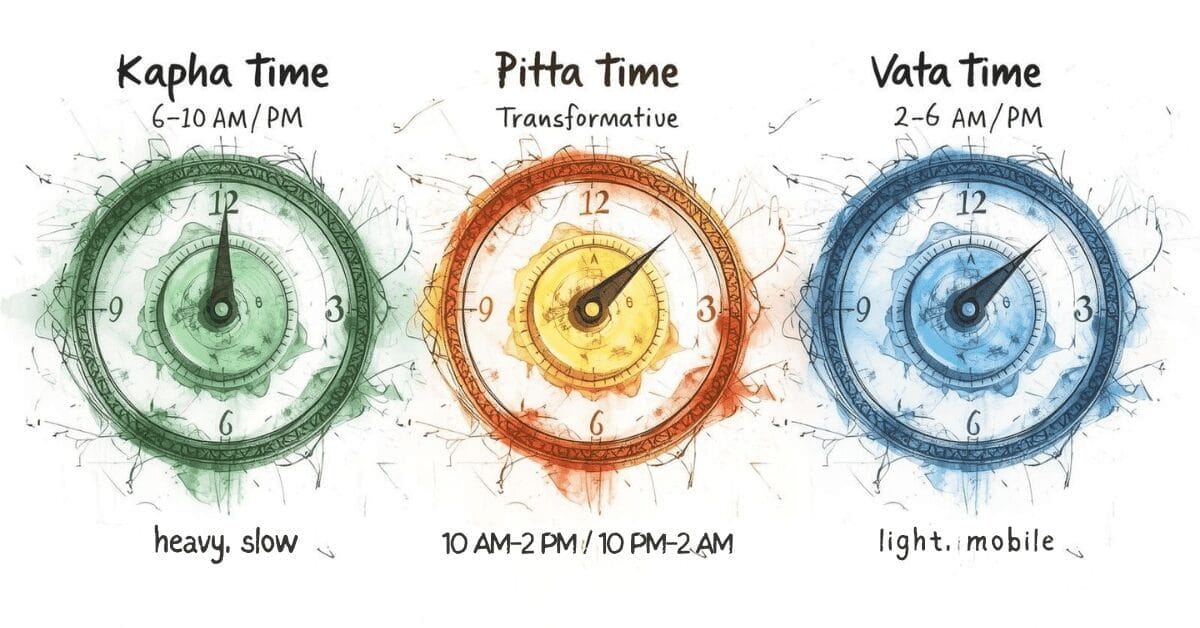
- 6-10 AM/PM: Kapha time (heavy, slow)
- 10 AM-2 PM / 10 PM-2 AM: Pitta time (intense, transformative)
- 2-6 AM/PM: Vata time (light, mobile)
Life Stages:
- Childhood (0-20 years): Kapha predominant (growth, development)
- Adulthood (20-60 years): Pitta predominant (achievement, transformation)
- Elder years (60+ years): Vata predominant (lightness, wisdom)

Seasonal Influences (Ritucharya)
Understanding seasonal routines is crucial for preventing imbalance:
Spring (Late Winter-Early Spring):
- Dominant Dosha: Kapha
- Qualities: Cool, damp, heavy
- Strategy: Lighten diet, increase exercise, reduce dairy and sweets
- Key Focus: Clearing accumulated kapha from winter
Winter:
- Dominant Dosha: Vata (early) transitioning to Kapha (late)
- Qualities: Cold, dry or damp depending on climate
- Strategy: Warm, nourishing foods, staying warm, moderate activity
- Key Focus: Building immunity and maintaining warmth
Summer:
- Dominant Dosha: Pitta
- Qualities: Hot, intense, sharp
- Strategy: Cooling foods, moderation, avoid excessive heat
- Key Focus: Preventing pitta aggravation through cooling practices
Fall (Autumn):
- Dominant Dosha: Vata
- Qualities: Dry, light, cold, windy, erratic
- Strategy: Warming, grounding foods, routine, oil massage
- Key Focus: Grounding and stabilizing vata’s mobile nature
The Six Tastes: Balancing Doshas Through Diet
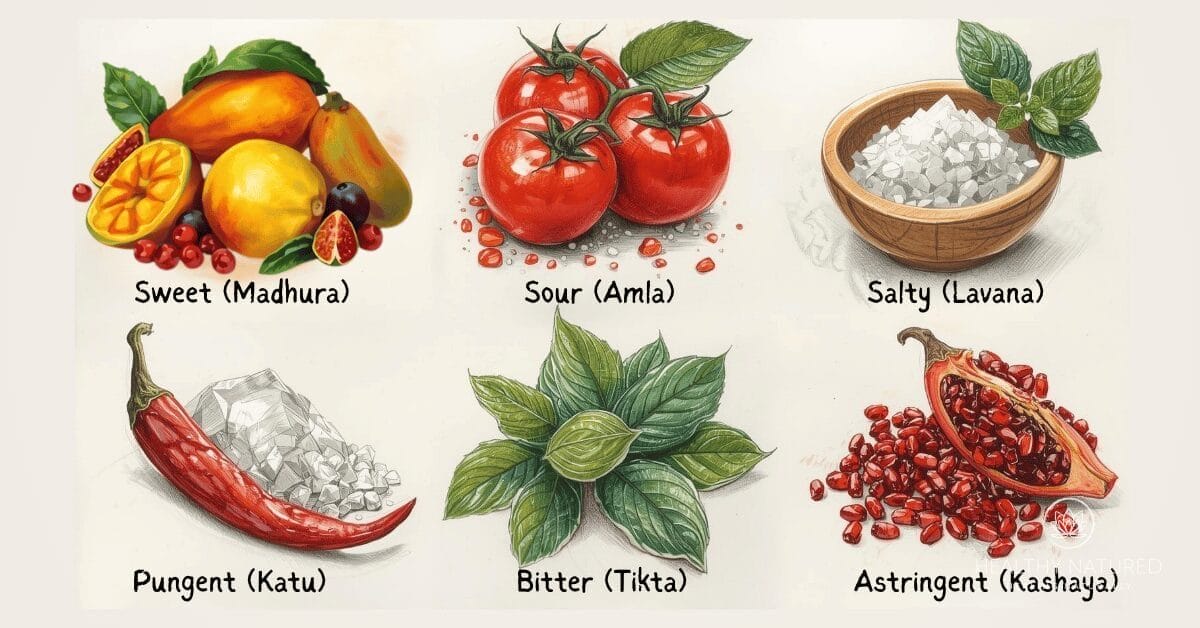
Ayurveda identifies six tastes (rasas), each with specific effects on the doshas.
Understanding the Tastes
Sweet (Madhura)
- Elements: Earth + Water
- Examples: Grains, milk, ghee, sugar, sweet fruits, root vegetables
- Effects: ↓ Vata, ↓ Pitta, ↑ Kapha
- Actions: Building, nourishing, grounding, strengthening
Salty (Lavana)
- Elements: Water + Fire
- Examples: Sea salt, rock salt, seaweed
- Effects: ↓ Vata, ↑ Pitta, ↑ Kapha
- Actions: Hydrating, softening, enhancing flavors
Bitter (Tikta)
- Elements: Air + Space
- Examples: Leafy greens, turmeric, fenugreek, dandelion, coffee
- Effects: ↑ Vata, ↓ Pitta, ↓ Kapha
- Actions: Detoxifying, cooling, reducing inflammation, clearing mind
Sour (Amla)
- Elements: Earth + Fire
- Examples: Citrus, yogurt, fermented foods, tomatoes, vinegar
- Effects: ↓ Vata, ↑ Pitta, ↑ Kapha
- Actions: Stimulating appetite, awakening mind, increasing absorption
Pungent (Katu)
- Elements: Fire + Air
- Examples: Chili, ginger, black pepper, garlic, onions, radishes
- Effects: ↑ Vata, ↑ Pitta, ↓ Kapha
- Actions: Stimulating, warming, clearing congestion, improving circulation
Astringent (Kashaya)
- Elements: Air + Earth
- Examples: Beans, lentils, pomegranates, cranberries, green tea
- Effects: ↑ Vata, ↓ Pitta, ↓ Kapha
- Actions: Drying, toning, firming, stopping bleeding
Creating Balanced Meals
A well-balanced meal includes all six tastes in appropriate proportions for your constitution. Example of a balanced plate:
Sweet: Rice or whole grains (majority)
Salty: Pinch of salt
Sour: Lemon wedge or small amount of yogurt
Pungent: Ginger or spices in preparation
Bitter: Leafy green vegetable side
Astringent: Lentil dal

Ayurvedic Food Combining: Optimizing Digestion
Improper food combining can create ama (toxins) and disturb doshic balance. Follow these principles:
General Guidelines
Avoid Combining:
- Milk with sour fruits, fish, meat, or yeasted bread
- Melons with anything (eat alone)
- Hot and cold foods in same meal
- Raw and cooked foods together
- Large quantities of leftovers (over 24 hours old)
Favor:
- Freshly cooked, warm meals
- Similar food types together
- Proper food sequencing (eat fruits alone, 30 minutes before meals)
- Mindful eating without distractions
Agni: The Digestive Fire
Your agni (digestive fire) determines how well you process food:
Signs of Strong Agni:
- Regular appetite at mealtimes
- Complete digestion within 3-6 hours
- Energy after eating
- Regular, well-formed elimination
- Clear mind
Signs of Weak Agni:
- Irregular appetite
- Feeling heavy or tired after meals
- Undigested food in stool
- Gas, bloating, or discomfort
- Cloudy thinking
To Strengthen Angi:
- Eat largest meal at midday (10 AM-2 PM during pitta time)
- Sip warm water with meals
- Use digestive spices (ginger, cumin, coriander, fennel)
- Avoid overeating (fill stomach 3/4 full)
- Allow 4-6 hours between meals
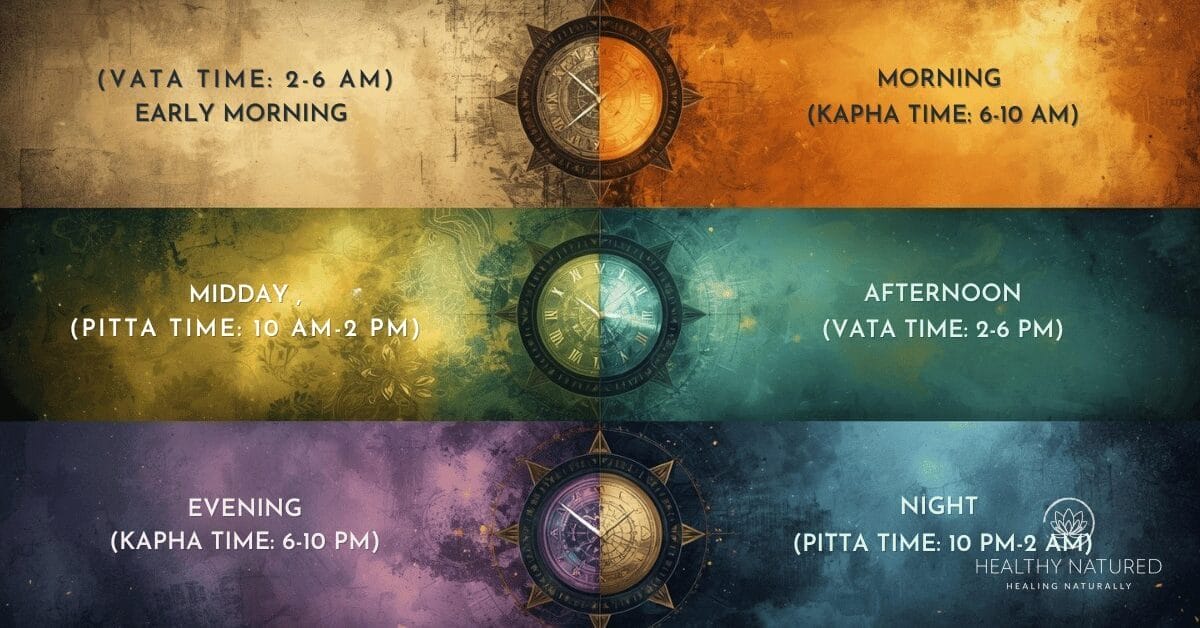
Dinacharya: The Ayurvedic Daily Routine
Establishing a daily routine aligned with natural rhythms is foundational for doshic balance:
Ideal Daily Schedule
Early Morning (Vata Time: 2-6 AM)
- Wake before sunrise (ideally by 6 AM)
- Empty bladder and bowels
- Scrape tongue to remove ama
- Brush teeth
- Oil pulling (swishing oil for 5-10 minutes)
- Drink warm water to stimulate digestion
Midday (Pitta Time: 10 AM-2 PM)
- Largest, most nourishing meal at noon
- Brief rest after eating (10-15 minutes)
- Peak productivity and focus time
Evening (Kapha Time: 6-10 PM)
- Light, early dinner (before 7 PM)
- Gentle evening walk
- Calming activities: reading, light conversation
- Minimize screen time
- Early bedtime (before 10 PM, during kapha time)
Morning (Kapha Time: 6-10 AM)
- Self-massage (abhyanga) with warm oil
- Gentle exercise, yoga, or walking
- Shower or bath
- Meditation and pranayama
- Light breakfast (optional for kapha types)
Afternoon (Vata Time: 2-6 PM)
- Continue work or activities
- Light snack if needed (especially for pitta)
- Creative pursuits
Night (Pitta Time: 10 PM-2 AM)
- Deep, restorative sleep
- Body’s natural detoxification and repair
Recognizing and Addressing Doshic Imbalances
Assessment Questions
Ask yourself these questions to identify current imbalances:
Physical Symptoms:
What is your energy level throughout the day?
How is your digestion? (Regular, irregular, too fast, too slow?)
What is the quality of your elimination?
How is your sleep? (Deep, light, interrupted, excessive?)
What is your body temperature? (Cold, hot, variable?)
Any pain or discomfort? Where?
Mental/Emotional State:
How is your mental clarity?
What emotions are predominant?
How do you respond to stress?
Is your mind calm or agitated?
Lifestyle Factors:
What season are we in?
What is the current weather?
What is your activity level?
Are you eating meals at regular times?
Are you getting adequate sleep?
Common Imbalance Patterns
Vata Imbalance Pattern:
- Symptoms worsen in fall/early winter
- Symptoms worse with cold, dry, windy weather
- Symptoms increase with stress, travel, irregular routine
- Late afternoon/early evening worsening (2-6 PM)
Pitta Imbalance Pattern:
- Symptoms worsen in summer/late summer
- Symptoms worse with heat, humidity
- Symptoms increase with competitive activities, alcohol, spicy foods
- Midday worsening (10 AM-2 PM)
Kapha Imbalance Pattern:
- Symptoms worsen in spring/late winter
- Symptoms worse with cold, damp weather
- Symptoms increase with sedentary lifestyle, heavy foods
- Morning and evening worsening (6-10 AM/PM)
Advanced Doshic Concepts
Sub-Doshas: The Refined Expression
Each dosha has five sub-types (sub-doshas) governing specific locations and functions:
Vata Sub-Doshas:
- Prana Vata (head, chest) – respiration, sensory perception, thought
- Udana Vata (throat, chest) – speech, effort, enthusiasm
- Samana Vata (stomach, small intestine) – digestive movement
- Apana Vata (colon, pelvic cavity) – elimination, menstruation, childbirth
- Vyana Vata (whole body) – circulation, movement
Pitta Sub-Doshas:
- Pachaka Pitta (stomach, small intestine) – digestion
- Ranjaka Pitta (liver, spleen, stomach) – blood formation
- Sadhaka Pitta (heart) – emotions, desires, consciousness
- Alochaka Pitta (eyes) – vision
- Bhrajaka Pitta (skin) – complexion, temperature
Kapha Sub-Doshas:
- Kledaka Kapha (stomach) – liquefaction of food
- Avalambaka Kapha (chest, heart) – protection, strength
- Bodhaka Kapha (tongue, throat) – taste perception
- Tarpaka Kapha (head, sense organs) – nourishment, contentment
- Shleshaka Kapha (joints) – lubrication
Ama: The Root of Disease
Ama (toxins) accumulates when:
- Agni (digestive fire) is weak
- Food combining is improper
- Food is of poor quality
- Eating is done at irregular times
- Elimination is impaired
Signs of Ama:
- Thick coating on tongue
- Bad breath or body odor
- Cloudy urine
- Feeling heavy or sluggish
- Decreased appetite
- Sticky stools that float
- Brain fog
Clearing Ama:
- Strengthen agni with digestive spices
- Simplify diet temporarily
- Fast or eat kitchari (cleansing dish)
- Drink warm water throughout day
- Gentle exercise to stimulate circulation
- Consider panchakarma (Ayurvedic detoxification)
Panchakarma: Advanced Doshic Purification
Panchakarma is Ayurveda’s signature detoxification therapy, consisting of five main purification procedures:
1. Vamana – Therapeutic emesis (for excess kapha)
2. Virechana – Purgation therapy (for excess pitta)
3. Basti – Medicated enema (for excess vata)
4. Nasya – Nasal administration (for head and neck issues)
5. Raktamokshana – Bloodletting (for blood-related pitta disorders)
Pre-Panchakarma Preparation:
Snehana – Internal and external oleation
Swedana – Therapeutic sweating
Panchakarma should only be performed under the guidance of trained Ayurvedic practitioners, as it requires careful preparation, monitoring, and post-treatment care.

Herbal Support for Doshic Balance
While diet and lifestyle are primary, herbs provide powerful support:
Vata-Balancing Herbs
- Ashwagandha – Adaptogenic, calming, strengthening
- Brahmi – Mental clarity, nervous system support
- Shatavari – Nourishing, moistening
- Triphala – Gentle regulator of elimination
- Bala – Strengthening, grounding
Pitta-Balancing Herbs
- Shatavari – Cooling, soothing inflammation
- Brahmi – Cooling for mind and emotions
- Turmeric – Anti-inflammatory, liver support
- Neem – Blood purifier, cooling
- Amalaki – Cooling, rejuvenating
Kapha-Balancing Herbs
- Trikatu – Warming, stimulating digestion
- Guggulu – Clearing congestion, lipid metabolism
- Punarnava – Diuretic, reducing fluid retention
- Bibhitaki – Clearing mucus from lungs
- Tulsi – Stimulating, clearing, immune support
Important Note: Consult with an Ayurvedic practitioner before starting herbal protocols, especially if taking medications or managing chronic conditions

Yoga and Pranayama for Doshic Balance
Vata-Balancing Practices
- Asana: Grounding poses (Mountain, Tree, Warrior I), forward bends, hip openers
- Pace: Slow, steady, meditative
- Pranayama: Nadi shodhana (alternate nostril), ujjayi (victorious breath)
- Focus: Grounding, stability, breath awareness
Pitta-Balancing Practices
- Asana: Cooling poses (Moon salutations, forward bends, Sheetali breath)
- Pace: Moderate, non-competitive
- Pranayama: Sheetali (cooling breath), sheetkari (hissing breath)
- Focus: Surrender, compassion, letting go of achievement
Kapha-Balancing Practices
- Asana: Vigorous Sun Salutations, backbends, chest openers
- Pace: Dynamic, energizing, faster flow
- Pranayama: Kapalabhati (skull-shining), bhastrika (bellows breath)
- Focus: Stimulation, opening heart, building heat
Practical Application: Your 30-Day Doshic Balance Plan
Week 1: Assessment and Awareness
- Complete dosha assessment
- Track symptoms and patterns
- Observe seasonal influences
- Notice daily rhythms
- Begin food and mood journal
Week 3: Lifestyle Integration
- Establish morning routine
- Practice appropriate exercise
- Begin self-massage (abhyanga)
- Adjust sleep schedule
- Add meditation or pranayama
Week 2: Dietary Adjustments
- Introduce appropriate tastes
- Establish regular meal times
- Strengthen agni with digestive spices
- Eliminate incompatible food combinations
- Add balancing herbal tea
Week 4: Refinement and Sustainability
- Assess progress and adjust
- Deepen beneficial practices
- Address remaining imbalances
- Plan for seasonal transitions
- Create long-term routine
Working with an Ayurvedic Practitioner
While this guide provides comprehensive information, individual assessment by a qualified practitioner offers:
- Pulse Diagnosis (Nadi Pariksha) – Refined assessment of doshic state
- Constitutional Analysis – Precise prakriti determination
- Personalized Protocols – Custom diet, lifestyle, and herbal recommendations
- Disease Management – Integration with conventional medicine
- Panchakarma Guidance – Supervised detoxification when appropriate
Look for practitioners certified by:
- National Ayurvedic Medical Association (NAMA)
- Ayurvedic Practitioners Association
- Recognized Ayurvedic institutions
Common Questions About the Doshas
Q: Can my dosha change over time?
A: Your prakriti (constitutional type) remains constant, but your vikruti (current state) fluctuates with seasons, lifestyle, age, and environmental factors.
Q: What if I’m tridoshic (equal in all three doshas)?
A: True tridoshic constitution is rare. Most people have one or two predominant doshas. If truly tridoshic, focus on seasonal balancing and listen carefully to body signals.
Q: How quickly will I see results from doshic balancing?
A: Minor imbalances can improve within days to weeks. Chronic conditions may require months of consistent practice. The rule of thumb: it takes one month for each year the imbalance has existed.
Q: Can I balance doshas if I don’t follow all recommendations?
A: Yes! Even small changes create impact. Start with 2-3 practices that resonate with you. Consistency matters more than perfection.
Q: What if my symptoms suggest multiple doshic imbalances?
A: This is common. Generally, address vata first (as it moves other doshas), then pitta, then kapha. Or consult a practitioner for guidance.
Q: Is Ayurveda compatible with modern medicine?
A: Yes. Ayurveda complements conventional medicine. Always inform all healthcare providers about treatments you’re receiving.
Conclusion: Your Journey to Doshic Harmony
Understanding the doshas is not merely an intellectual exercise—it’s a practical framework for self-knowledge and optimal health. By recognizing the elemental forces within you and learning to work with rather than against your constitution, you unlock your body’s innate healing intelligence.
The beauty of Ayurveda lies in its personalized approach. There is no one-size-fits-all protocol, no universal diet, no standard routine that works for everyone. Your unique combination of doshas requires a unique approach to health and wellness.
Start where you are. Make one small change aligned with your doshic needs. Observe the results. Adjust and refine. Over time, this ancient wisdom becomes your personal roadmap to vibrant health, mental clarity, and spiritual fulfillment.
The doshas teach us that health is not the absence of disease, but a dynamic state of balance—physical, mental, emotional, and spiritual. When you understand and honor your doshic nature, you don’t just prevent disease; you create the conditions for thriving.
Your journey to doshic balance begins now.
Additional Resources
Recommended Reading:
- “The Complete Book of Ayurvedic Home Remedies” by Vasant Lad
- “Prakriti: Your Ayurvedic Constitution” by Robert Svoboda
- “The Ayurveda Encyclopedia” by Swami Sadashiva Tirtha
Online Resources:
- Banyan Botanicals Ayurvedic Library
- Ayurveda.com
- National Ayurvedic Medical Association
Find a Practitioner:
- NAMA Directory: ayurvedanama.org
- Ayurvedic Practitioners Association Directory