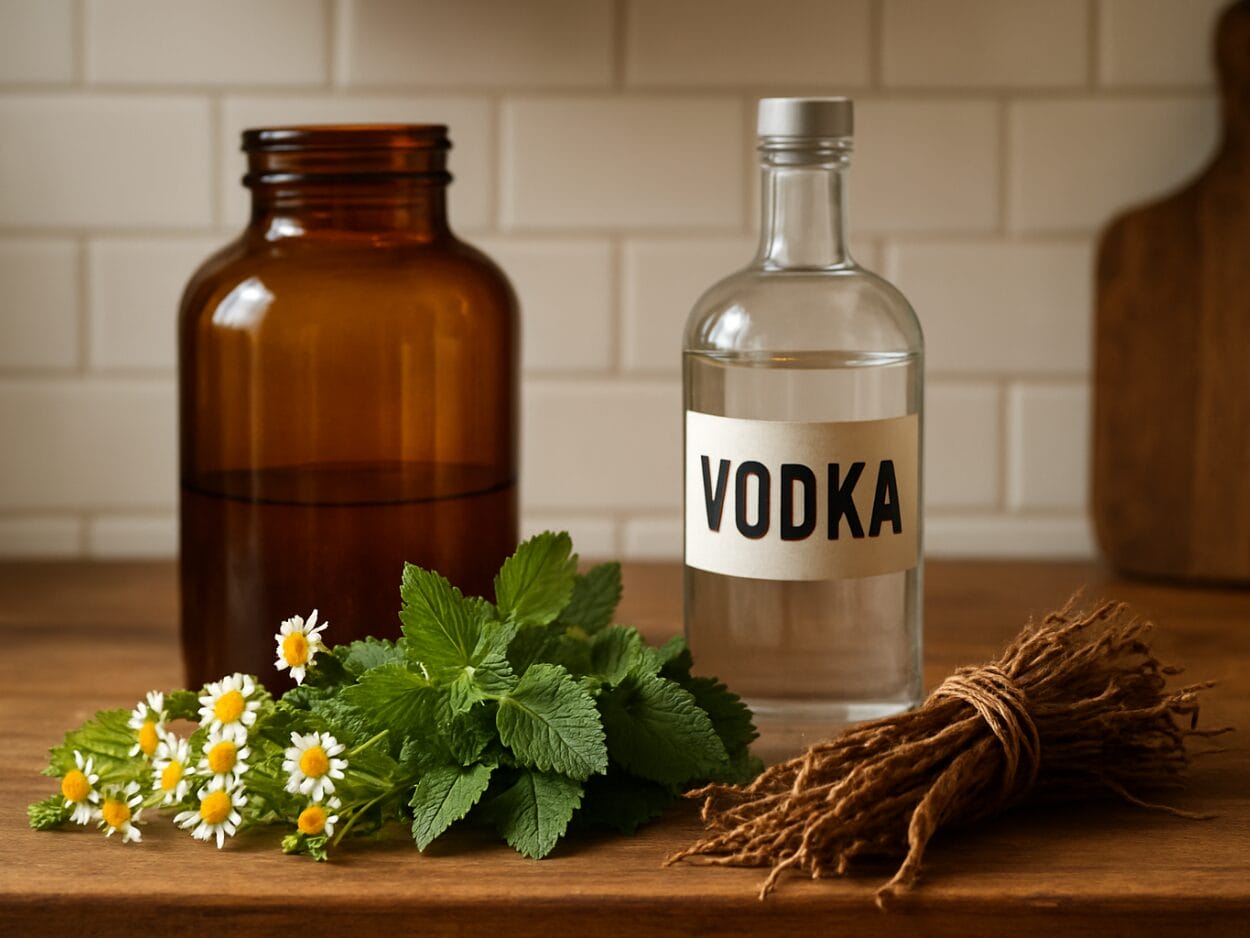
Servings: 400 ml herbal tincture
Cost: $15
Equipment
1 Glass jar with tight lid ((amber or dark glass))
Label ( (important!))
Ingredients
- 1 cup dried herb (or 2 cups fresh)
- 1 bottle 40–60% alcohol ((vodka works well))

Instructions
- Prepare the Herb. If using fresh herbs chop finely without masticating or bruising. If using dried herb lightly crush them with hands or rolling pin to increase surface area. (see notes for 3 popular herbal tinctures)1 cup dried herb
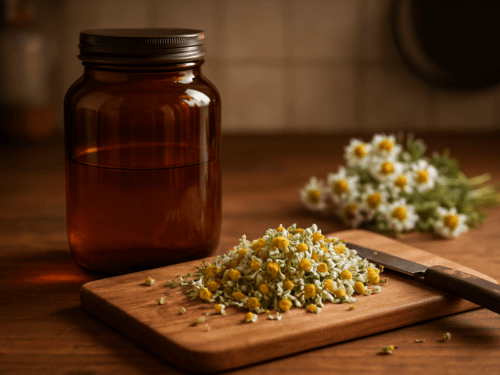
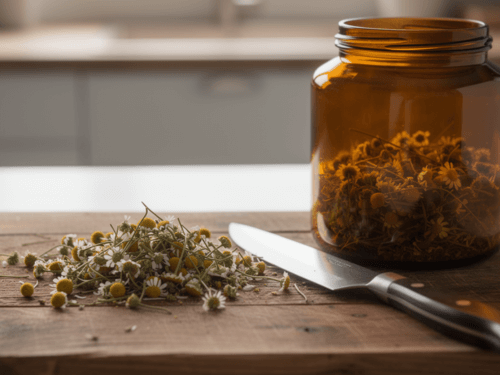
- Depending on the size of your jar and whether you are using fresh or dry fill the jar ½ to ¾ full with dried herbs and ¾ to ⅚ with fresh herbs
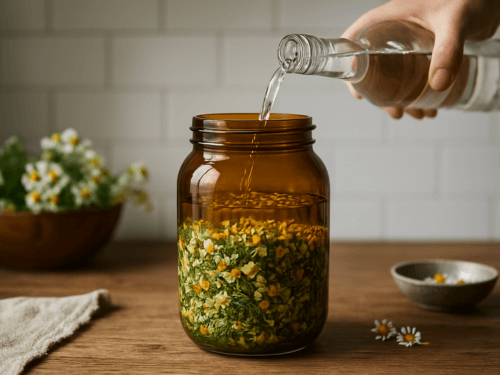
- Add your Alcohol (we recommend vodka as it is high alcohol and won't impact herb). Again depending on the size of the jar pour alcohol over the herbs making sure they are completely submerged. Ensure you leave a 2–3 cm headspace between the top of the alcohol and the bottom of the lid. Ensure herbs remain covered at all times. (see notes for a substitute if you prefer to not use alcohol)1 bottle 40–60% alcohol
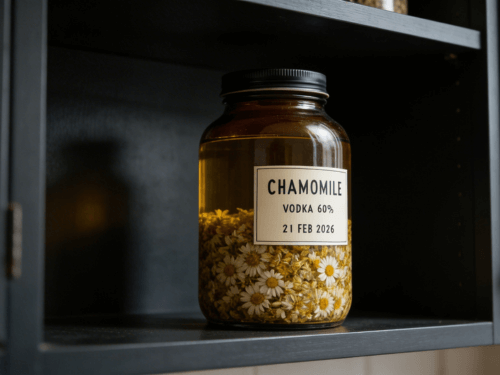
- Seal with a sterile lid and label. This is important especially if you have made several tinctures with differing herbs or alcohol. This label will make sure when you use the tincture you administer the correct dosage.Label with: Herb name(s), the Alcohol type and %, The date steeping started.Store your sealed tincture in a cool, dark place. Shake daily. Top up with the same alcohol when needed to ensure the herb is always submerged.
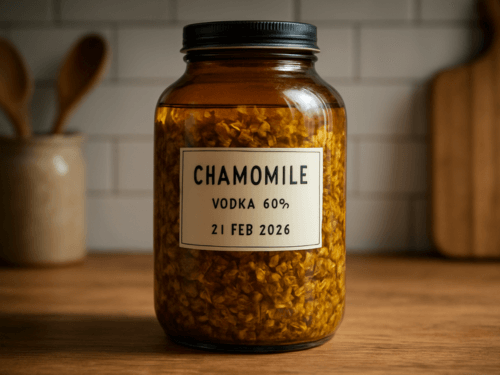
- Extraction and steeping takes time. we recommend you wait minimum 4 to 6 weeks. Roots may benefit from 6–8 weeks.
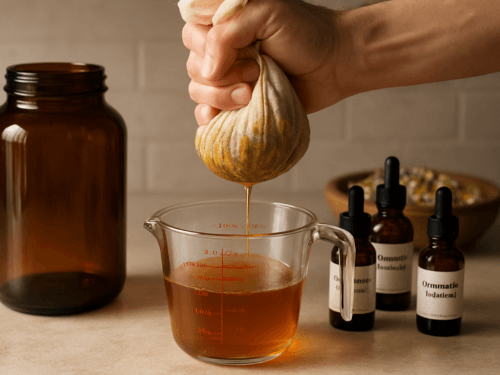
- Once the allotted time has past strain the tincture through your piece of cheesecloth into a clean dry serving jug/bowl. Squeeze the herbs well to gain all the goodness from the mixture. Discard the herbs. Fill your amber dropper bottle(s). Your tincture is ready to use. Store in a dark dry place.
Notes
There is no absolute weight or measure for herbs or alcohol. Weight and dosage is important when consuming tincture. ASs a guide we recommend:
2–3 mL, up to 3 times daily during acute illness
-
- Fill jar ½–¾ full with dried herbs
- Pack jar ¾ full with fresh herbs
3 Popular Herbal Tinctures to Make
Echinacea Tincture (Immune Support)
Best For:- Cold and flu onset
- Immune stimulation
- Short-term immune support
- Use dried echinacea root
- Ratio: 1:5
- 50–60% alcohol
2–3 mL, up to 3 times daily during acute illness
Did You Make This? We would love to see it! If you share socially please mention @healthynatured or tag #healthynatured!
